The Long View
Essays from Orrery · one story, told in a spiral
Essays that step back from any one mission and take in the whole subject — how we find our way out there, how we get off the ground, how we go farther, and what seventy years of it all adds up to. One story, told in a spiral.
Into the Dark
The fundamentals of going — how we find our way, move, and stay in touch where there are no roads.
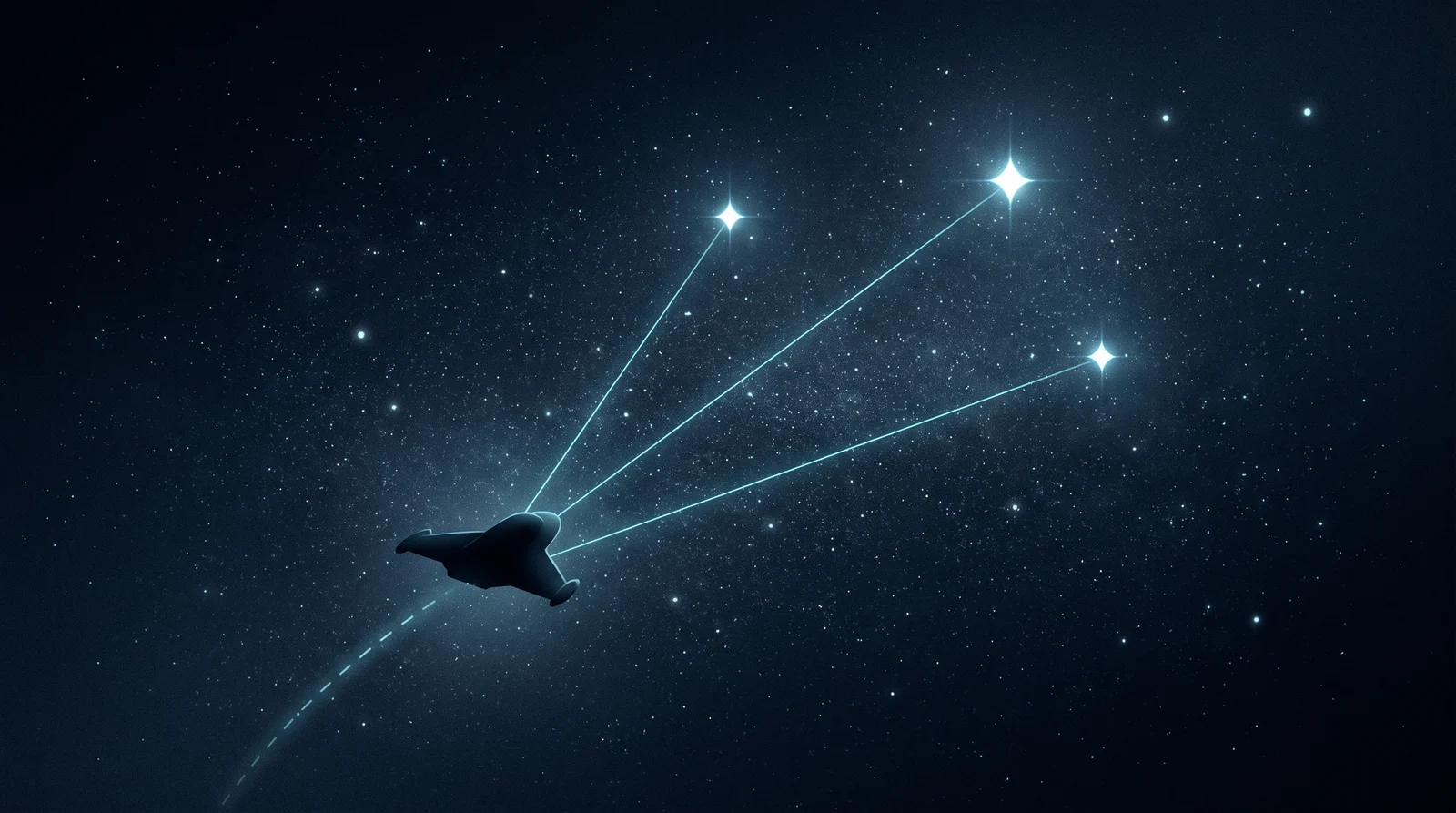
Finding Mars in the Dark
How do you steer to a moving planet across a hundred million kilometres of nothing, with no map, no horizon, and a twenty-minute lag on every instruction? The seventy-year answer is stranger, and more human, than the machines suggest.
Read →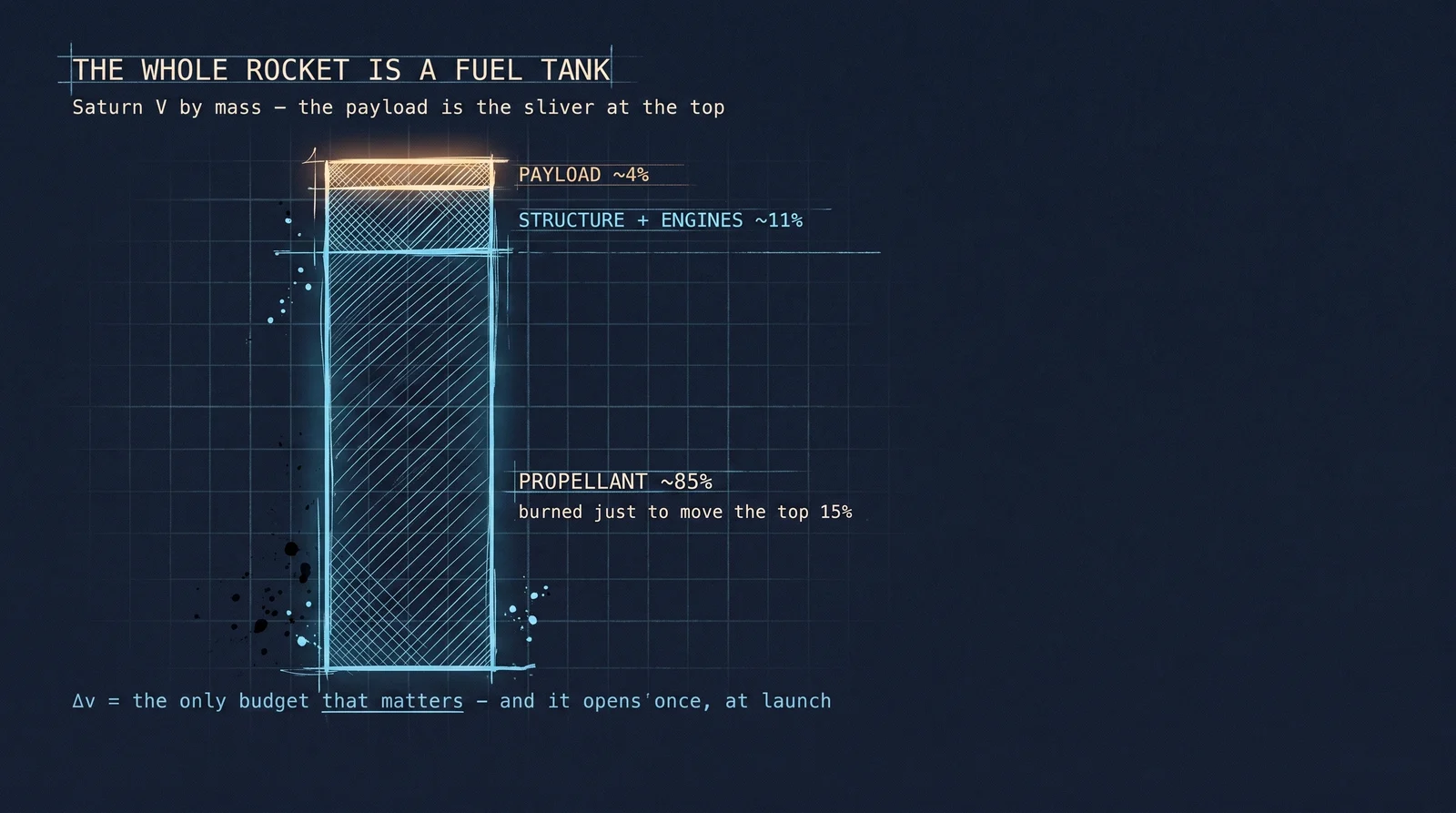
The Grammar of Delta-V
Every spacecraft that has ever left Earth carried one thing above all else: a budget. Not money — velocity. The rocket equation meted it out in kilometres per second, gravity was the only free refill, and every engineer who ever planned a mission has been living inside that constraint since 1903.
Read →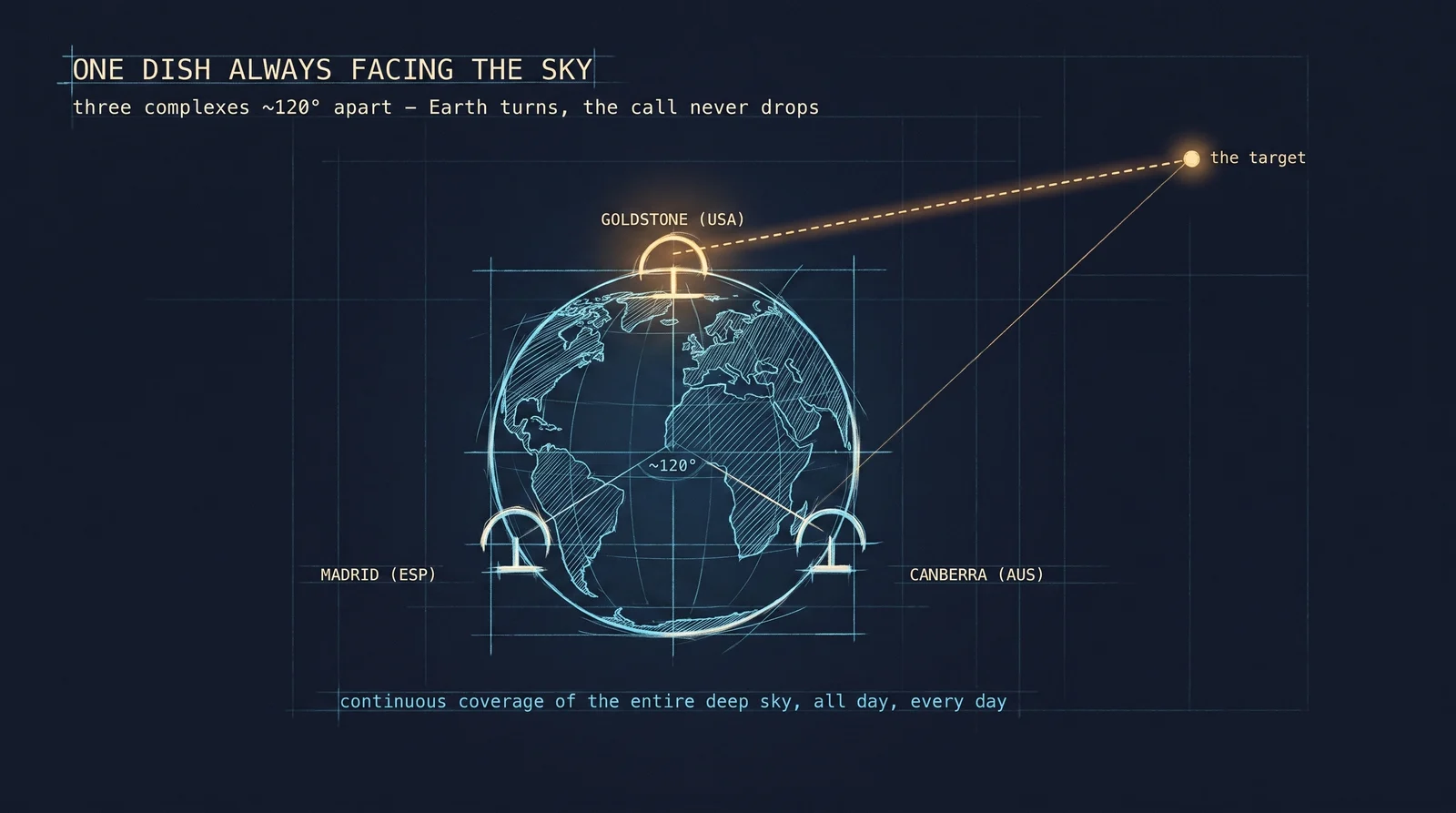
Running the Solar System on a Whisper
Three dish complexes on Earth carry on every conversation humanity has ever had with anything beyond the Moon. A 22-watt radio signal, a light-hour of patience, and the most oversubscribed network in the solar system — this is how the whole enterprise holds together.
Read →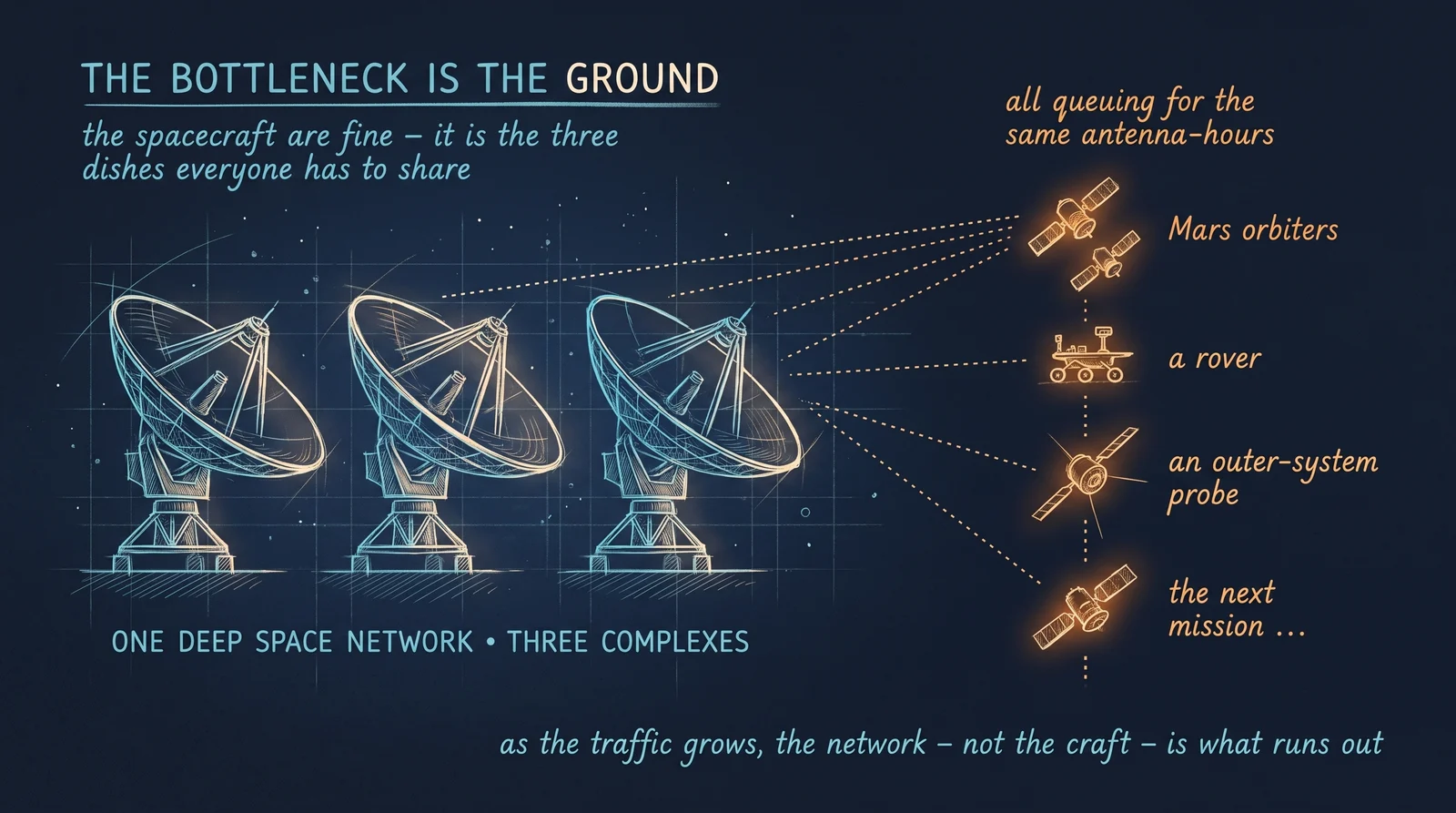
Louder Than a Whisper
The Deep Space Network was built for a handful of probes. It is about to face the traffic of a solar-system civilisation. The fixes — antenna arrays, laser links, a store-and-forward internet — are real, and they are already being built. None of them beats the speed of light.
Read →The Machines
How we build the going — leaving the ground, and the exits beyond the chemical rocket.
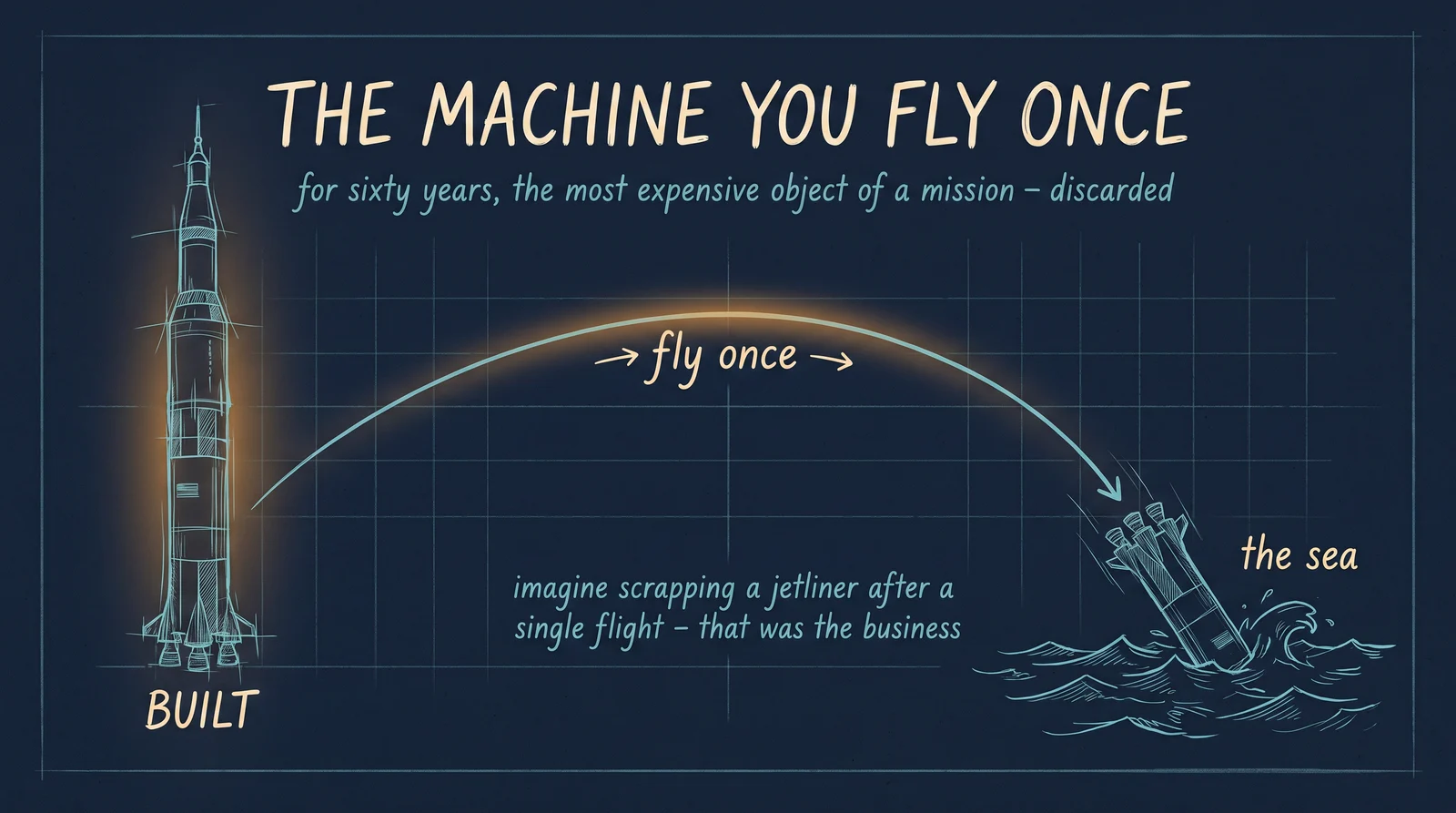
Keep the Rocket
For sixty years we built the most expensive machine in human history, flew it once, and dropped it in the ocean. The people who decided to stop doing that have quietly pulled off the biggest shift in spaceflight since Apollo.
Read →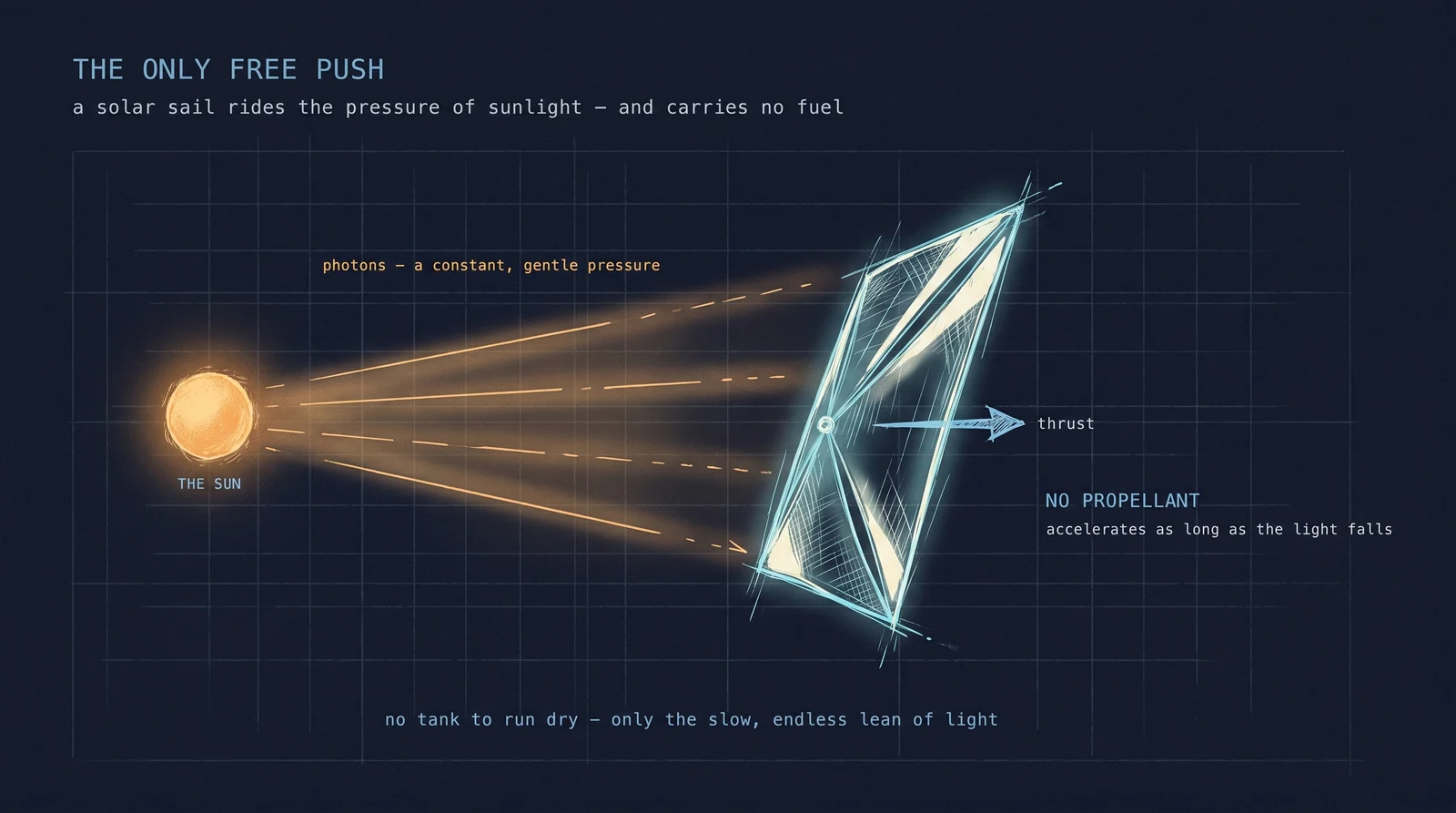
The Exits We've Always Known
The chemical rocket is a century-old ceiling we've ridden with extraordinary skill. The roads out — ion drives, [solar sail](/science/propulsion/solar-sail)s, [nuclear-thermal](/science/propulsion/nuclear-thermal) engines — were sketched before the first satellite flew. They are only now, haltingly, being built.
Read →The Destinations
Where we are actually going — the Moon we keep relearning, the Mars that breaks every plan, and the rocks worth more as fuel than as gold.
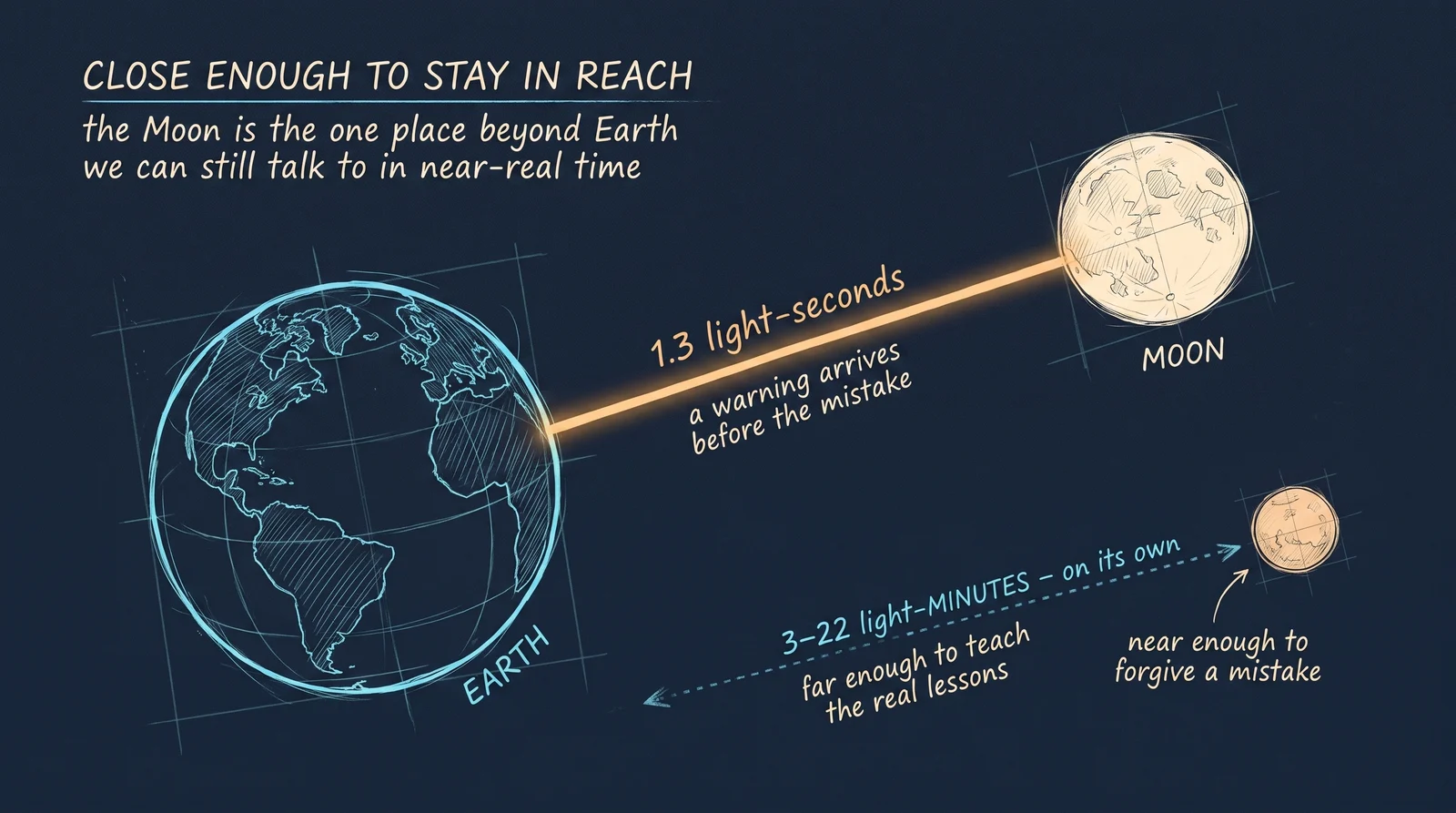
The Practice Ground
We went to the Moon once, at extraordinary cost, then stopped for half a century and let the institutional memory die. Now we are relearning it — and this time, the reason we are going has changed.
Read →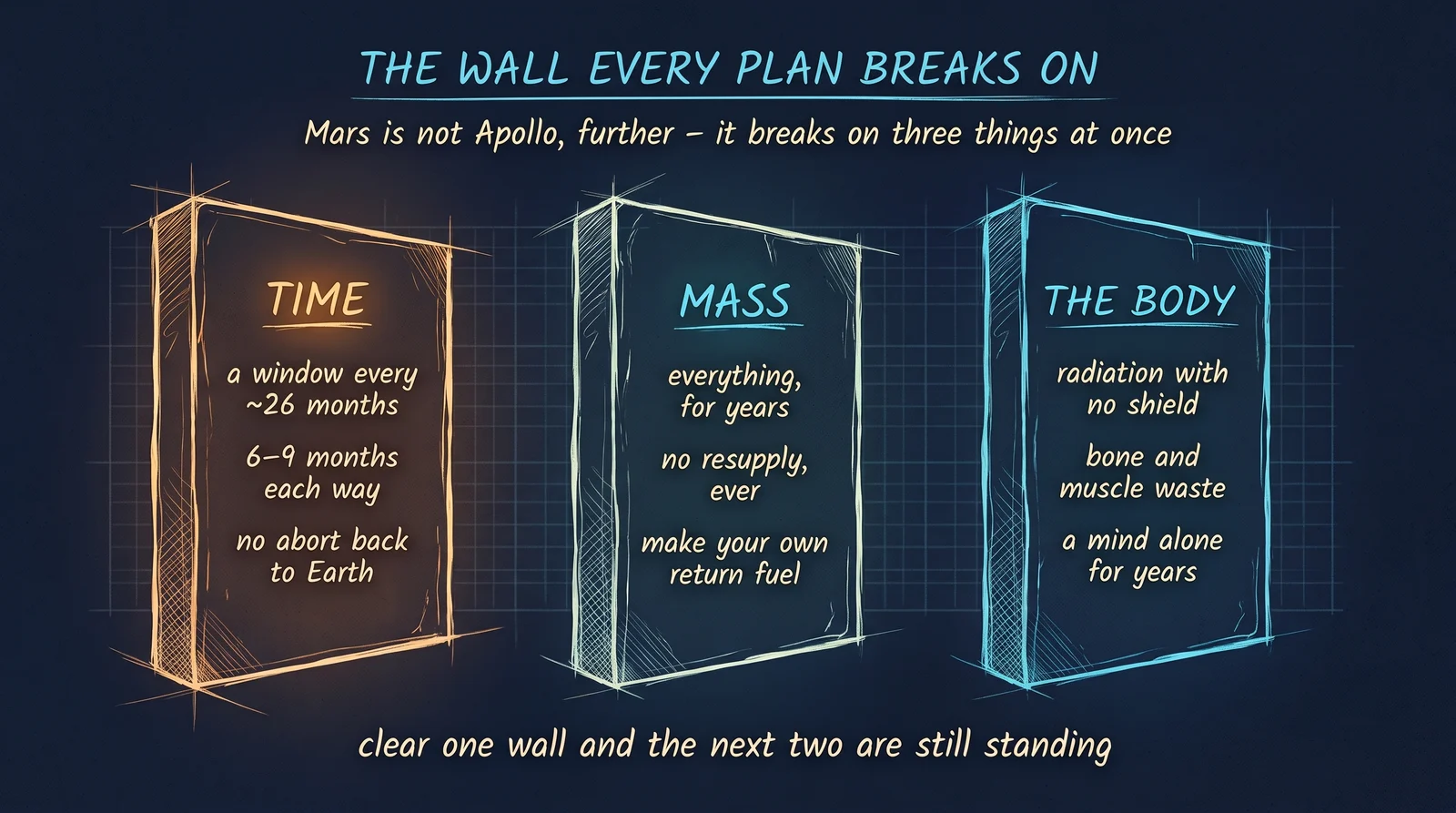
The Wall
Every human spaceflight plan eventually runs into Mars, and Mars breaks every one of them on the same three things at once: time, mass, and the body. It is not Apollo but further. It is a categorically different problem — and understanding why those confident departure dates keep sliding is the beginning of understanding it honestly.
Read →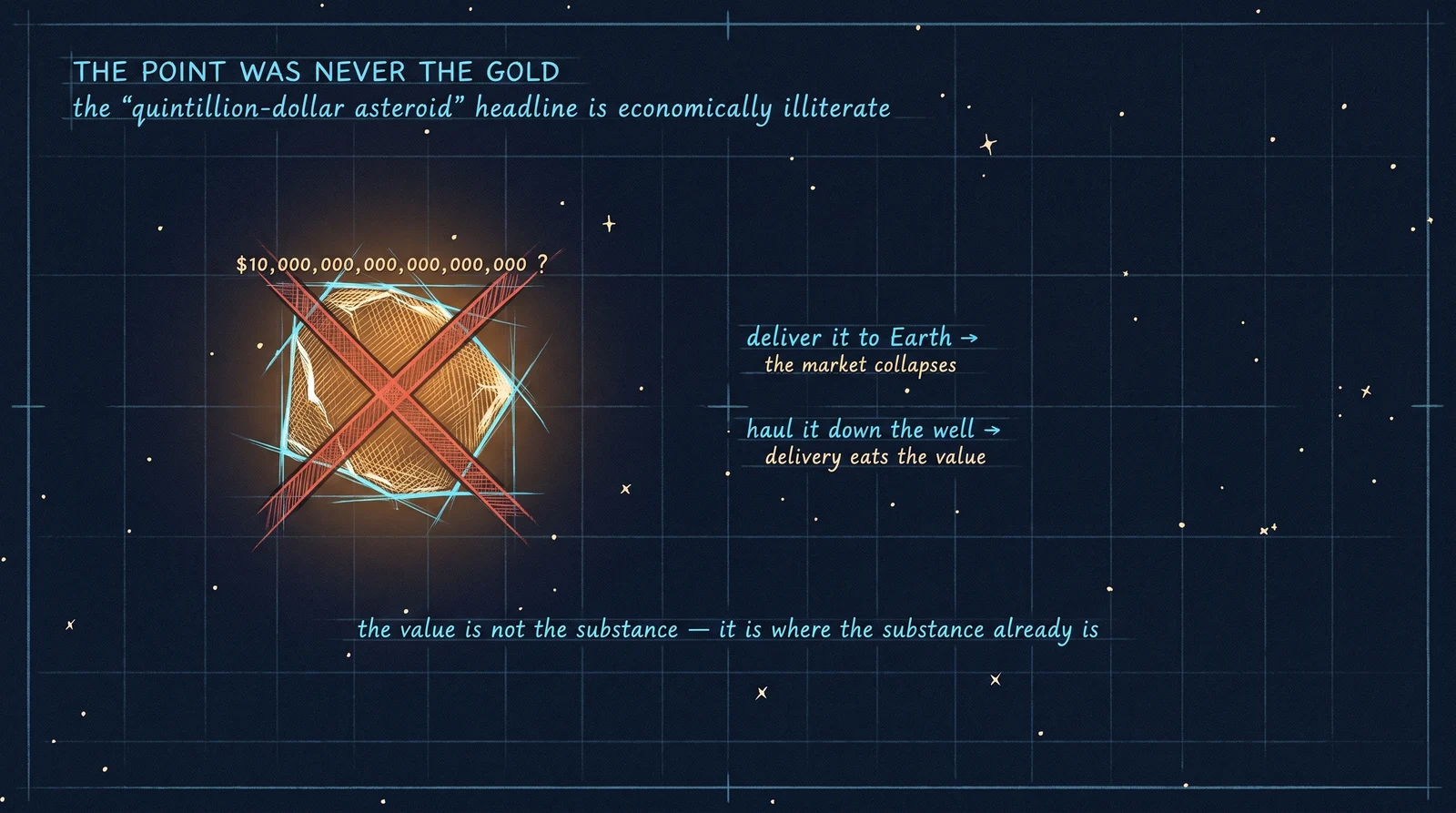
The Wrong Treasure
The headline says asteroids contain quadrillions of dollars of gold and platinum. The headline is wrong — not about the metal, but about the money. The real argument for asteroid resources runs in the opposite direction entirely.
Read →Arrival & the Body
The cost of getting there — the violence of landing, and the fragile traveller the whole enterprise exists to carry.
The Seven Minutes
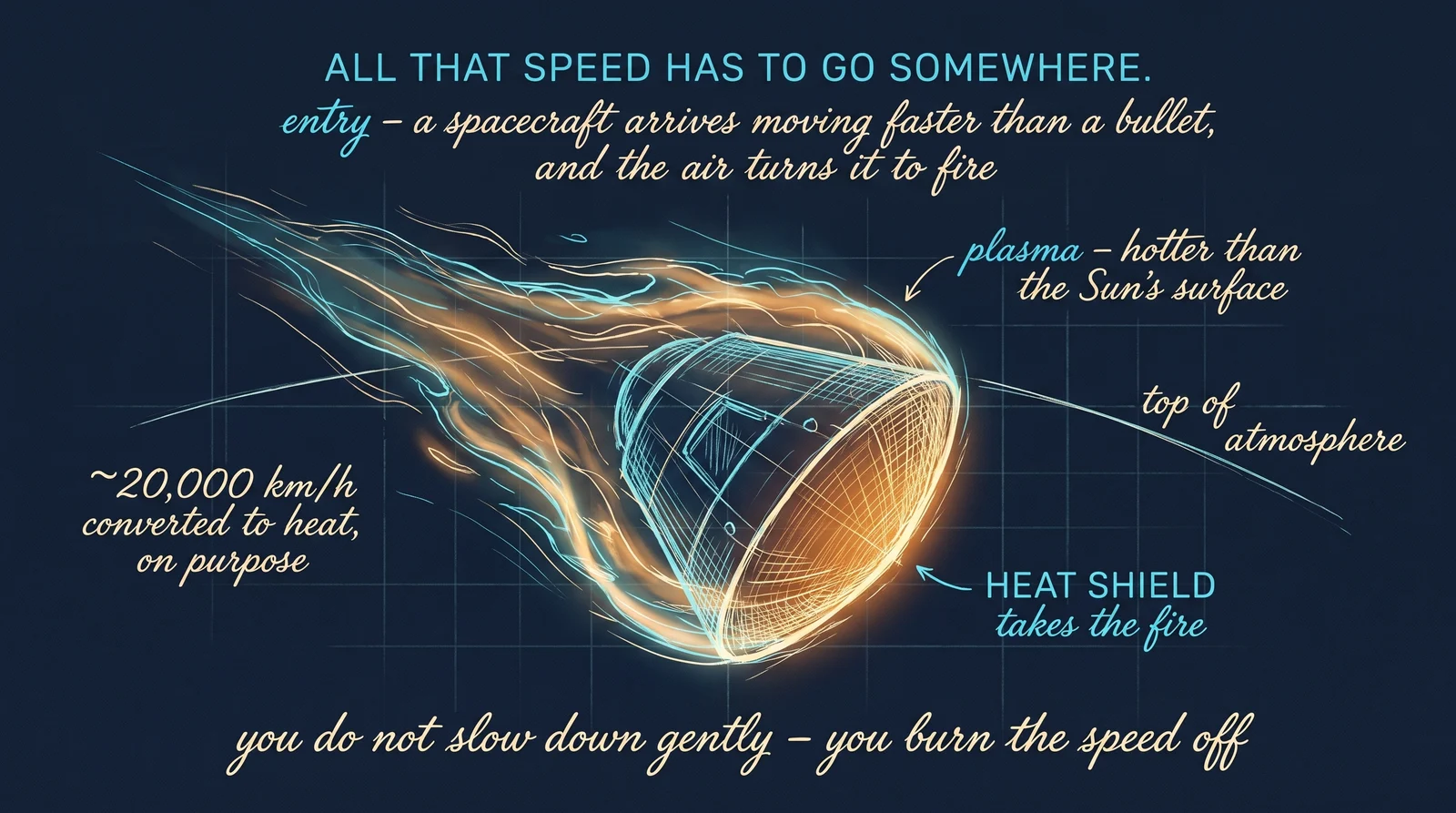
The cruise is easy. You spend months doing almost nothing — coasting on physics, nudging a trajectory, waiting. Arriving is where missions die. Landing is the hardest thing in spaceflight, and we have never solved it the same way twice.
Read →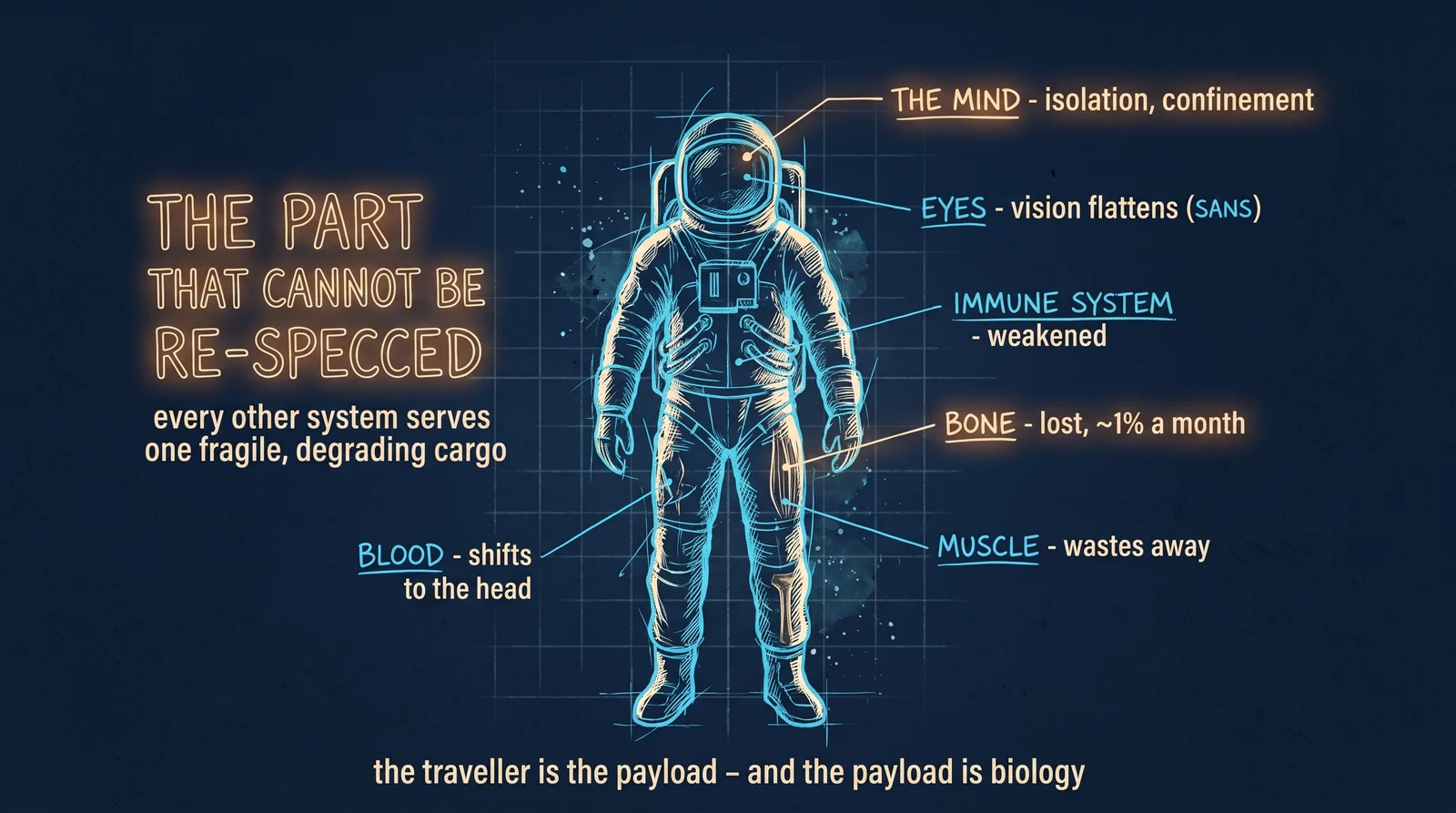
The Body in the Dark
Everything else in this collection is engineering — navigation, propulsion, landing, talking across the void. This is the one problem no engine solves: the traveller is biology that degrades, and the human body is the fragile cargo the whole enterprise exists to protect.
Read →The Far Horizon
The honest edge of the map — the arithmetic of the stars, and the ship that would have to become a world.
The Honest Arithmetic
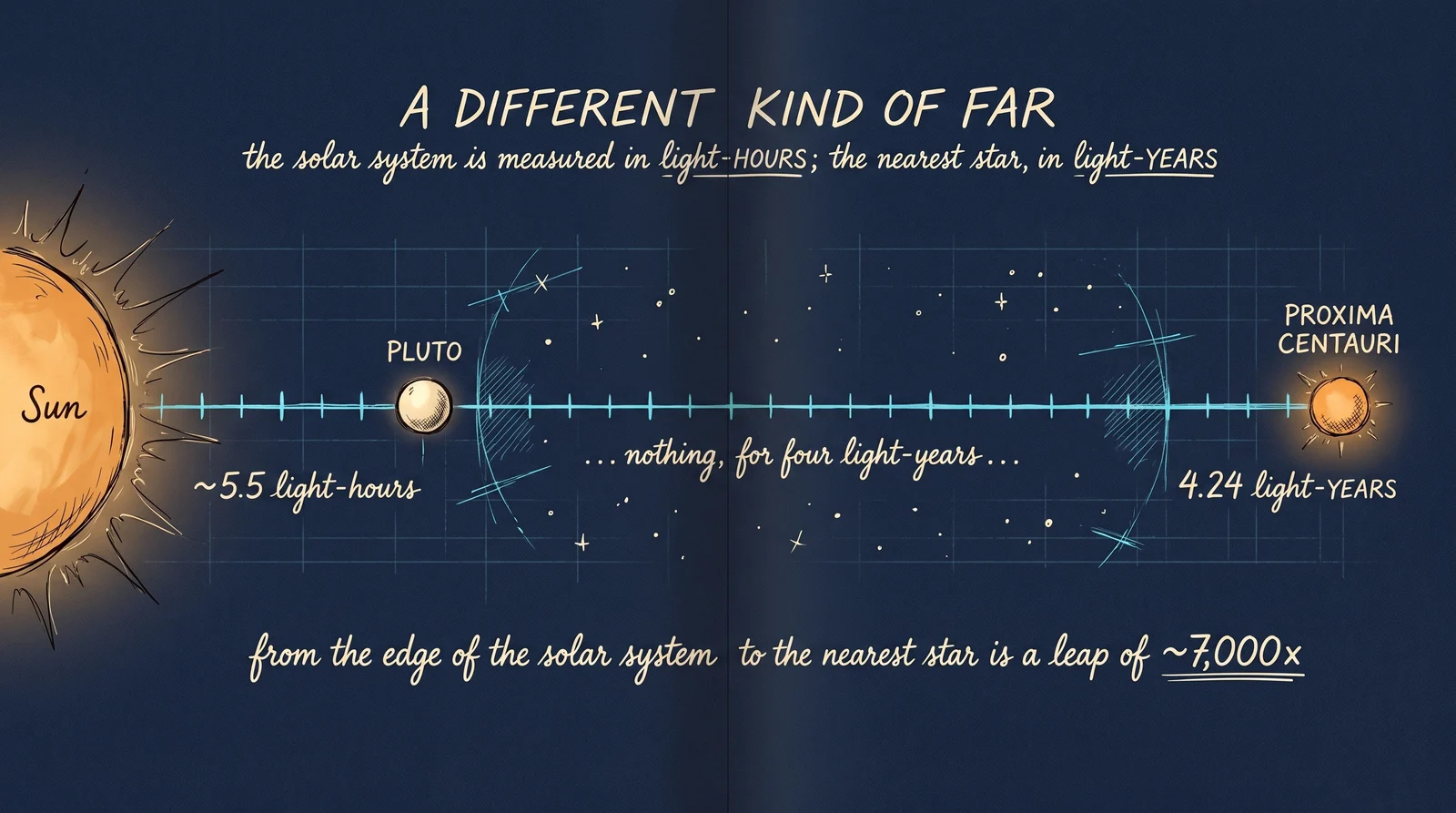
The nearest star is not far in the way that Mars is far, or even Pluto. It is a categorically different kind of distance — and the sober math of getting there has a way of making every serious proposal look quietly heroic and quietly doomed at the same time.
Read →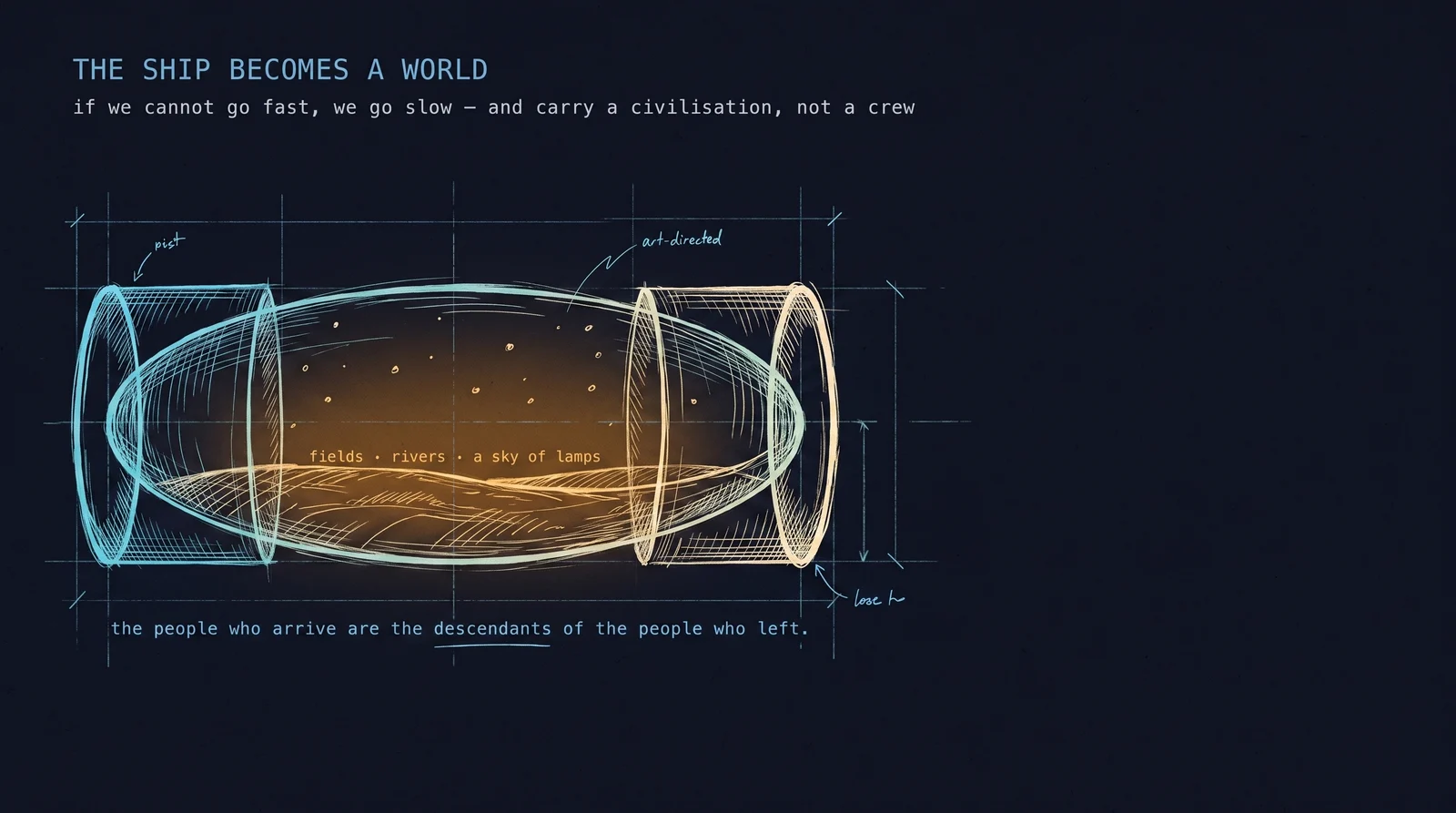
The Ship Becomes a World
If we cannot go fast, the only alternative is to go slow — to trade speed for time and let the crew become a lineage. The generation ship is not a plan anyone is building. It is a mirror held up to everything we already are.
Read →