Engine types — chemical, electric, nuclear
There are three families of rocket engine that have ever flown: chemical (everything that gets things off Earth), electric (everything that does long deep-space cruise), and nuclear thermal (NERVA tested, none yet operational).
Chemical engines are the only family with enough thrust to lift their own weight against Earth's gravity, so every launcher in history has been chemical. They split into three sub-families. Solid motors are basically a steel tube filled with rubbery propellant cast around a hollow core — you light one end, it burns at a controlled rate, and you cannot turn it off. Cheap, simple, reliable, but no throttling and no shut-down: the Space Shuttle SRBs, Ariane 5 / Ariane 6 boosters, SLS boosters, Indian PSLV stages, every ICBM, and most military missiles are solid. Liquid bipropellant engines pump a fuel and an oxidiser separately into a combustion chamber — far more flexible (throttling, restart, shutdown, throttling deep) but mechanically intricate: the Saturn V F-1, Falcon 9 Merlin, RS-25, Vulcain, Raptor, YF-100. Hybrid engines (solid fuel + liquid or gaseous oxidiser) are a quiet third path used by SpaceShipTwo and a handful of sounding rockets — they trade liquid's complexity for solid's lack of shutdown.
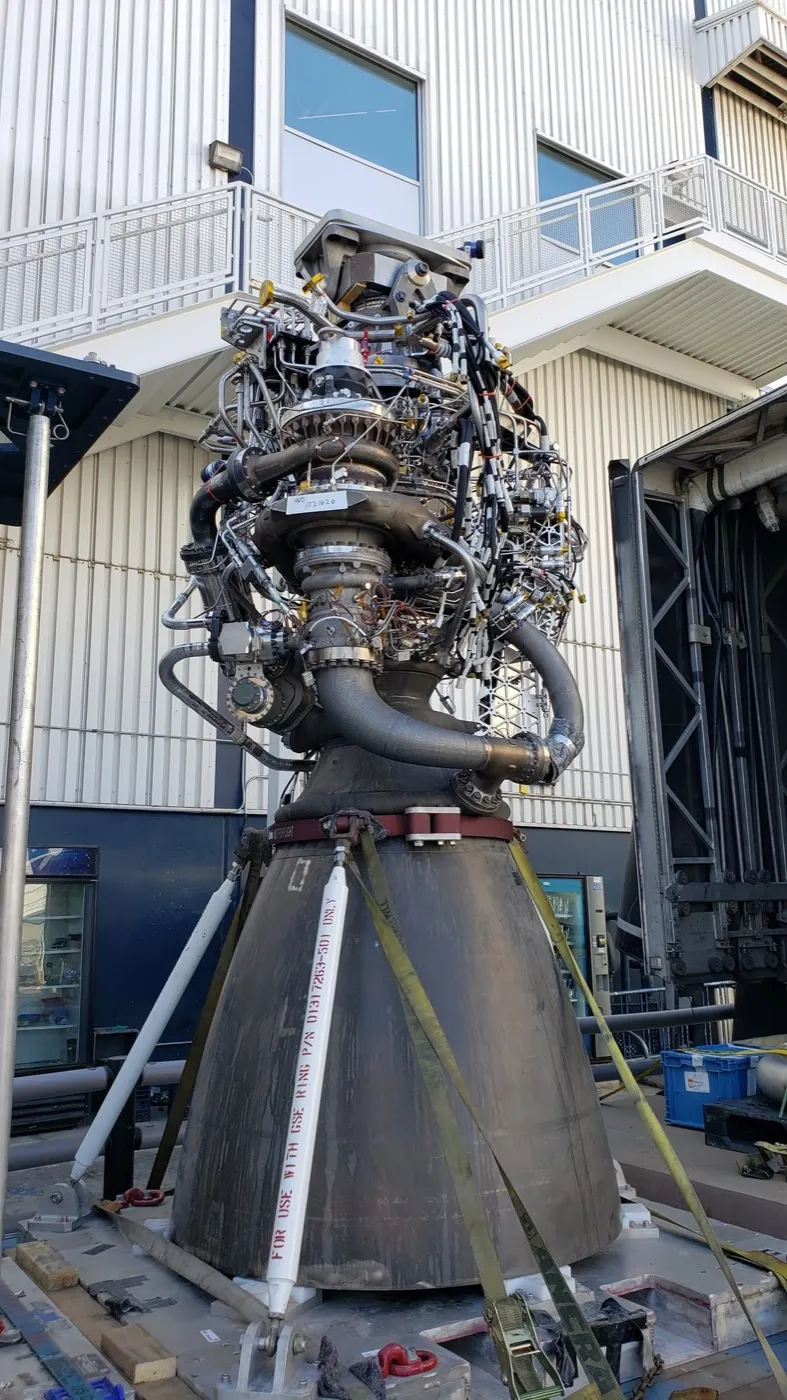
Inside the liquid family, the engine *cycle* matters as much as the propellants. Gas-generator (Merlin, F-1): a small fraction of propellant burns in a side chamber to drive the turbopump, then dumps overboard — wasteful but simple. Expander (RL10): the cryogenic fuel cools the nozzle, vaporises, and the resulting gas drives the turbopump — elegant but limited to small engines. Staged combustion (RS-25, NK-33, Raptor): all the propellant goes through the preburner-then-main-chamber path, capturing all the energy. Full-flow staged combustion (Raptor, the first ever flown): two preburners, one oxidiser-rich and one fuel-rich, driving two turbopumps — the highest-performance arrangement ever attempted. Each step up the cycle ladder buys you 20-40 seconds of specific impulse but adds plumbing, mass, and development cost.
Electric propulsion (ion drives, Hall-effect thrusters) does not lift anything off a planet, but once you are in space its specific impulse is 10-30× higher than any chemical engine. The trade is thrust: a chemical first stage produces millions of newtons; a state-of-the-art Hall thruster (NASA Glenn AEPS, 12 kW) produces about 0.6 N — less than the weight of an apple. You make it up in time: BepiColombo's four T6 gridded-ion thrusters have been firing nearly continuously for years to brake into Mercury orbit, where a chemical-only mission would need an impossibly large fuel load. Dawn used the same approach to orbit two asteroids on one launch. The power source is solar in inner solar system, RTG-driven for outer-planet concepts.
Nuclear thermal propulsion (NTP) is the family that has been almost-ready since 1965. The principle: hydrogen flows past a hot nuclear reactor, heats to 2500-3000 K, and expands through a nozzle. Isp is 800-1000 seconds — double a hydrolox engine — with thrust in the 50-250 kN range (lower than chemical but vastly higher than electric). NASA's NERVA programme test-fired full-scale engines through the 1960s; the more recent DRACO demonstrator (NASA + DARPA) targeted a ~2027 in-orbit test but was cancelled in the 2026 budget. As of 2026 no NTP engine has flown. The blocker has always been political and regulatory rather than technical: launching a nuclear reactor, even an unfuelled one designed to go critical only in orbit, sits in a category of public-acceptance and treaty constraint that has historically killed the programme every decade or so.
SEE IN THE APP
- /fleet Falcon 9 (Merlin gas-generator kerolox), SLS (RS-25 staged-combustion hydrolox + solid boosters), Starship (Raptor full-flow staged-combustion methalox), Long March 5 (YF-77 hydrolox + YF-100 kerolox)
- /missions Dawn and BepiColombo used Hall-effect / gridded-ion drives for years-long deep-space cruises after chemical ascent