Contact
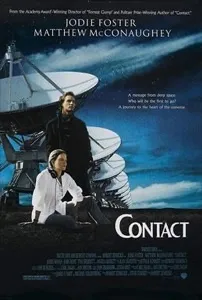
From Sagan's novel. The most respectful Hollywood film about SETI ever made — gets the science right, the politics right, and treats faith as a serious counterweight rather than a strawman.
Films, documentaries, podcasts, and YouTube channels for when you want space content you didn't have to read. Curated for what's actually accurate (or beautifully wrong on purpose), not for what's popular.
From Sagan's novel. The most respectful Hollywood film about SETI ever made — gets the science right, the politics right, and treats faith as a serious counterweight rather than a strawman.
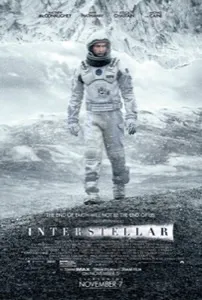
Kip Thorne consulted on the physics; the black-hole render in the film led to a peer-reviewed paper. Hard SF wrapped in a family story. The hour-on-the-water-planet scene is the best illustration of time dilation in any medium.
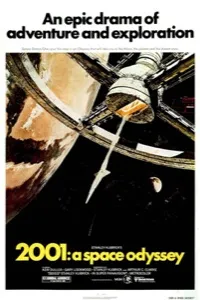
Made before Apollo 11 landed. Kubrick refused to fake anything he couldn't justify physically: rotating-habitat gravity, vacuum silence, slow ballistic trajectories. The visual language of every serious space film since.
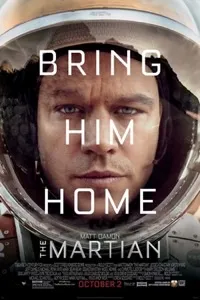
An astronaut survives by running the numbers. Hab fabric, RTG, perchlorates, water synthesis — every problem in the film is a real problem and every solution is the one a real engineer would try. Pair with /mars site=curiosity.
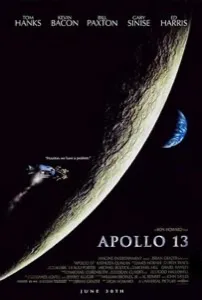
Procedural drama for the procedural-drama age. The CO₂ scrubber scene is the platonic ideal of mission-engineer competence; the navigation-by-Earth's-terminator scene is good orbital mechanics.
Three and a quarter hours on the Mercury 7 + Chuck Yeager's parallel test-pilot life at Edwards. Captures why the U.S. crewed-spaceflight program took the shape it did better than any history film. The Mercury hardware + the LC-5/LC-14 pad routines are recognisably accurate. Pair with /fleet?id=mercury-capsule + the 6 Mercury missions in /missions.
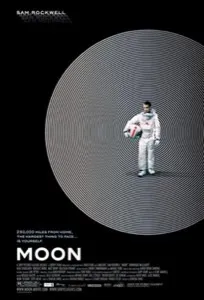
Small, quiet, claustrophobic. Sam Rockwell as a lone helium-3 miner on the far side. Practical effects, sparse music, a single performance. The opposite of spectacle SF.
Alt-history series: what if the Soviets landed on the Moon first? Becomes a multi-decade serious treatment of a near-future space industry. The hardware details are unusually accurate for prestige TV.
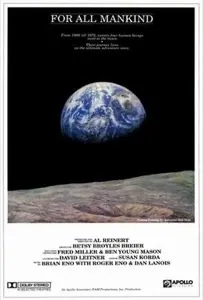
Apollo documentary using only the astronauts' own narration over NASA's restored footage. No talking heads, no historians — just the missions. Brian Eno scored it. The reference text.
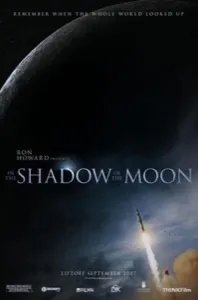
Interviews with all the surviving Apollo astronauts (no Armstrong; he declined). Layered against archival footage. Best companion piece to the Apollo missions in the /missions catalogue.
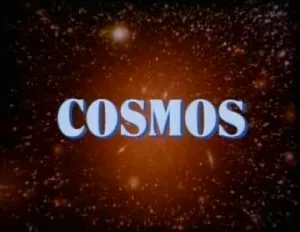
13 episodes. Still the best long-form science television ever made. The Voyager imagery was state-of-the-art when it aired; the Library of Alexandria reconstruction still works 45 years later.
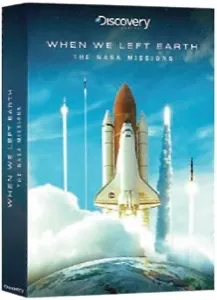
Six episodes covering Mercury, Gemini, Apollo, Shuttle, ISS, and Hubble. NASA opened the archives for it; the unscored mission footage is the highlight.
Two space podcasters who actually know what they're talking about, riffing on the week's industry news. Best place to get caught up on commercial spaceflight policy + launch operations.
Solo deep-dives on specific commercial / NASA program decisions. Tightly edited; ~30 min per episode. Listen to the back catalogue chronologically for a clear narrative of the 2015-2025 launch industry.
Florida-public-radio space coverage. Strong on Kennedy Space Center + commercial launch site operations. Short episodes, news-driven.
KSP-famous Scottish astronomer-turned-explainer. Best at making active mission news comprehensible 24 hours after it happens. Mix of launch breakdowns + historical deep dives.
Tim Dodd; long-form interviews with rocket engineers + visual explainers of propulsion concepts. The Raptor-engine series is a free graduate course in modern liquid-fuel design.
Derek Muller; broader science channel but the space episodes (light cones, Kessler syndrome, gravitational lensing) are unusually careful with the physics. Good production budget put to honest use.
For when you want the math. Matt O'Dowd walks through relativity, cosmology, quantum gravity at a level where you'll still need to pause and think. The graduate-level companion to the rest of this list.