SpaceX · USA · 2002–now

SpaceX — Falcon & Dragon
A startup that nearly went broke made rockets reusable, cut the price of orbit, and gave the United States back its own ride to space.
Crewed campaign ACTIVE
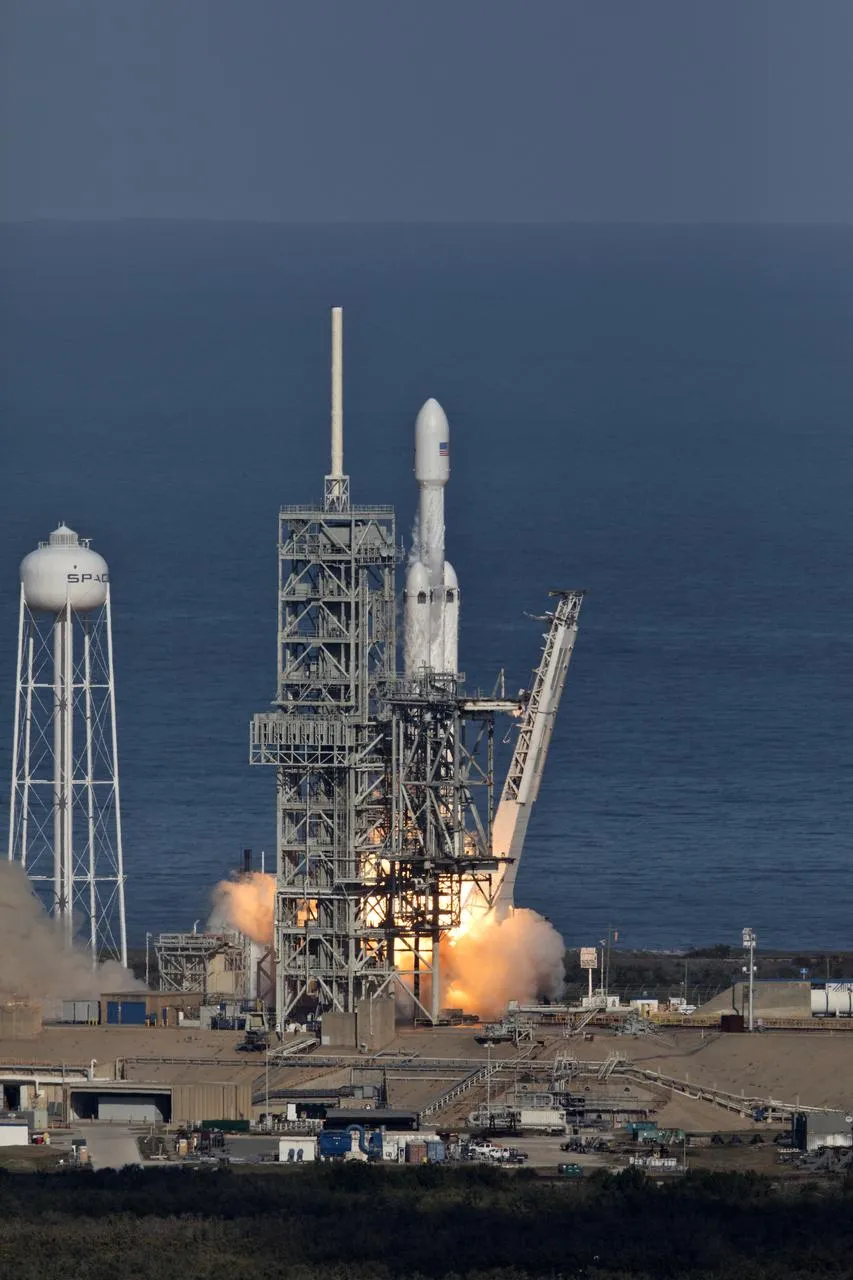
The land
For half a century, the central fact of spaceflight was that rockets were thrown away. Every launch consumed a machine that had cost tens of millions to build, used it once, and dropped it in the ocean — the equivalent of scrapping an airliner after a single flight. Everyone knew this was why space was expensive; almost no one believed it could be fixed. Reusability had been tried, most notably by the Space Shuttle, and had ended up costing more, not less. The lesson the industry drew was that expendable rockets were simply the price of doing business.
SpaceX was founded in 2002 on the opposite bet: that a rocket's first stage could fly, come home, land, and fly again — and that doing so would collapse the cost of reaching orbit. For years the bet looked foolish. The company's first rocket, the small Falcon 1, failed three times and came within one more failure of bankruptcy. Its fourth flight, in 2008, reached orbit on the last money the company had. Everything SpaceX later became was built on that single flight it could not afford to lose.
Goals
The founding goal was audacious and stated plainly from the start: make humanity a spacefaring civilization, and ultimately settle Mars. But the near-term goal that made any of that plausible was narrower and harder — drive down the cost of access to orbit by an order of magnitude, and the only known lever for that was reuse. Falcon 9 was designed from the outset so its first stage could survive reentry, steer itself back, and land on its legs.
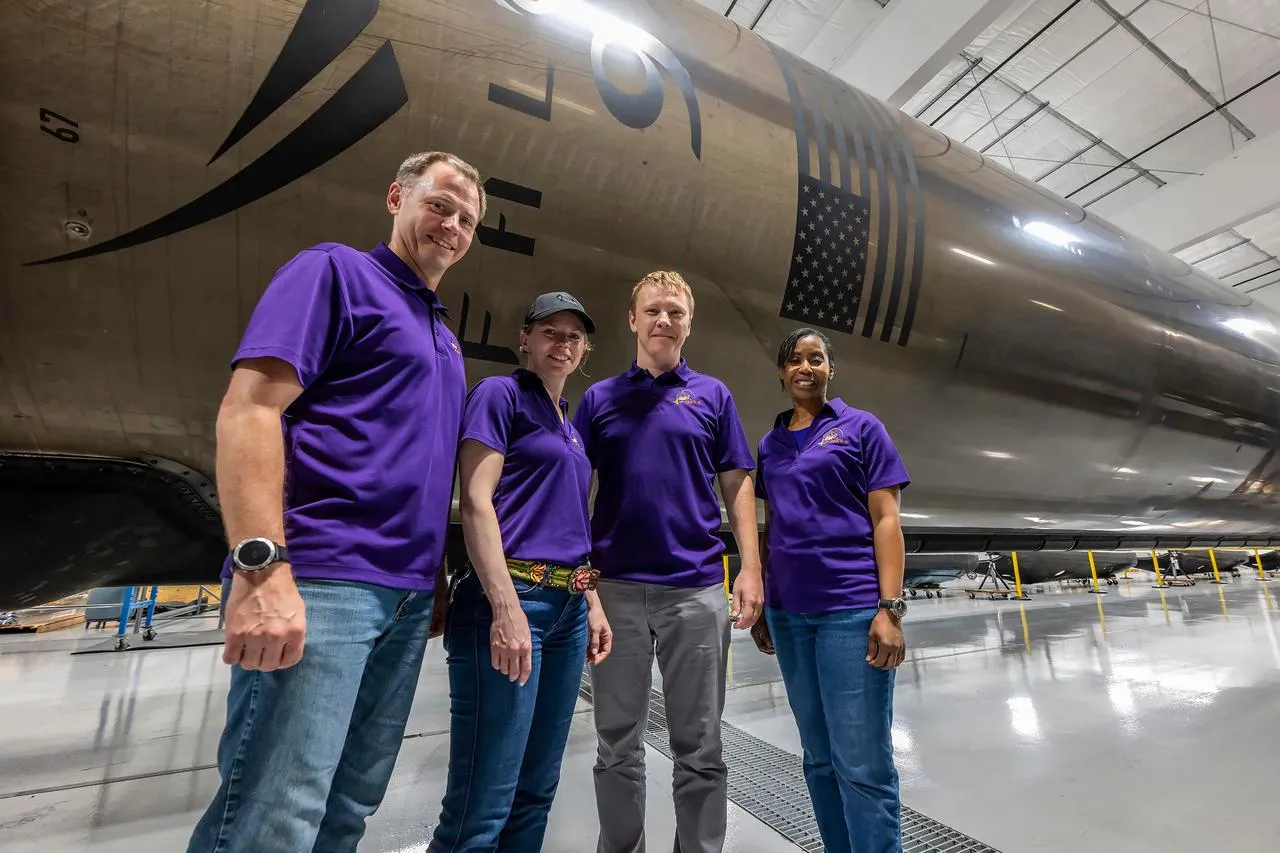
There was a second, quieter goal set by NASA rather than SpaceX: to hand routine access to low Earth orbit — cargo, and then crew — to commercial providers, so the agency could stop operating trucks and go back to exploration. SpaceX became the proof that this could work. Dragon carried cargo to the ISS from 2012, and Crew Dragon carried astronauts from 2020, ending nine years in which the only ride to the Station America had built was a Russian one.
Outcome
It worked, and it reset the industry. Falcon 9 landed its first booster in December 2015, reflew one in 2017, and by the 2020s was landing and reusing stages so routinely that a launch without a recovery became the exception. The price of a kilogram to orbit fell sharply, launch cadence rose to a rate no one else came close to matching, and a capability that had belonged only to nation-states — human-rated orbital launch — was now operated by a private company.
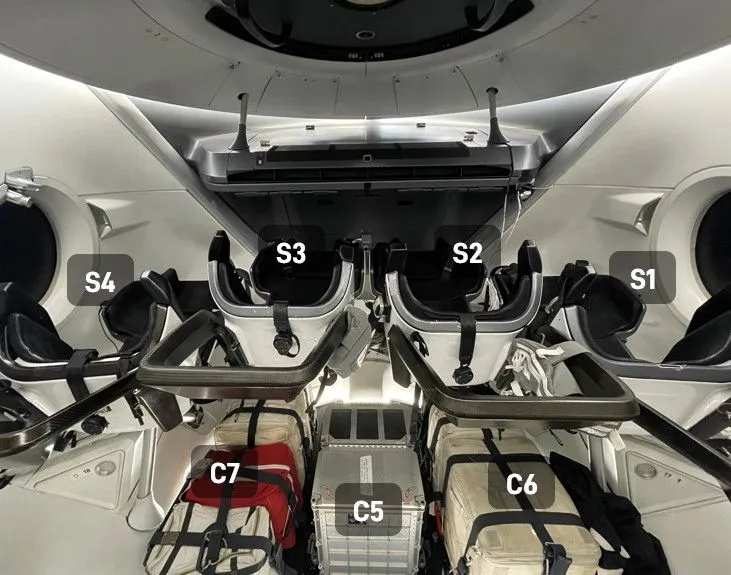
The human side went further than restoring a capability; it opened a new one. Crew Dragon flew not only NASA astronauts to the ISS but the first all-civilian orbital crew (Inspiration4, 2021) and the first commercial spacewalk (Polaris Dawn, 2024). Orbit, for the first time, became something a private mission could buy and fly — not a stunt, but the start of a market.
The story
The through-line of Falcon and Dragon is a single stubborn idea carried past the point where everyone else had given up on it. Reusability was not a new concept; it was a discredited one, and SpaceX's achievement was less invention than refusal — refusal to accept that the Shuttle's failure to make reuse cheap proved reuse could not be cheap. The difference was iteration: the company crashed boosters into the ocean and onto barges, again and again, treating each failure as data rather than defeat, until the landings became boring.
That method — fly, fail, fix, fly again, fast — is the real product. It let a company with a fraction of a traditional aerospace budget out-develop incumbents who tested less and flew more cautiously. It is also, applied to human spaceflight, controversial: the same tolerance for visible failure that made Falcon cheap is harder to accept when there are people aboard. Crew Dragon's spotless record is the answer SpaceX gives to that worry — the place where the move-fast culture met the one domain that punishes it hardest, and held.
And it changed who spaceflight is for. By making launch a service you can buy rather than a program a government must run, SpaceX turned itself into infrastructure — the road that Starlink rides to orbit, that NASA rides to the Station, and that Starship is meant to extend all the way to Mars. Falcon and Dragon are the foundation the rest of the company stands on.
What it gave back
The first legacy is a permanently lower price of orbit. Reusable first stages are no longer a SpaceX eccentricity but the direction the whole industry is now scrambling to follow — the thing every serious new launch vehicle is designed to do. The Shuttle promised to make space cheap and didn't; Falcon 9 did, and in doing so changed what missions are affordable enough to fly at all.
The second is the commercialization of human spaceflight. Crew Dragon proved a private company could be trusted to launch astronauts, restoring US capability and beginning the handover of low orbit to industry — the model on which the ISS's commercial successors are being planned.
And the third is a template for iteration itself: build fast, fly early, fail visibly, and improve on a cadence traditional aerospace could not match. That method is now being pointed at a far larger machine — Starship — and at a far larger goal.
What we can learn
The lesson of Falcon and Dragon is that a discredited idea is not the same as a wrong one. Reusability had failed once, and the industry mistook that for proof it could not work. SpaceX's advantage was refusing that inference — treating the Shuttle as one flawed attempt rather than a verdict, and iterating until the thing everyone said was impossible became routine.
The deeper lesson is about the price of a single flight. The company survived on the fourth Falcon 1 launch and nothing more; had it failed, none of the rest would exist. Great capabilities often hang on one fragile moment early on — and the difference between the companies that reshape an industry and the ones that vanish is sometimes just whether that one flight went up.
Missions
- 2008 Falcon 1, flight 4 the first privately-developed liquid-fuel rocket to reach orbit — flown weeks before the company ran out of money, on the last flight it could afford
- 2012 First Dragon to the ISS the first commercial spacecraft to berth with the Station — the private sector begins resupplying human spaceflight
- 2015 First booster landing a Falcon 9 first stage returns and lands upright — reusability, dismissed for decades as uneconomic, is demonstrated
- 2021
 the first all-civilian crew to orbit — no professional astronauts aboard at all
 - 2024
 the first commercial spacewalk, from a Crew Dragon in a newly-designed SpaceX suit
Hardware
- Falcon 9 reusable launcher
- Falcon Heavy heavy launcher
- Crew Dragon crew spacecraft
- Cargo Dragon V1 cargo spacecraft
- Cargo Dragon 2 cargo spacecraft