Multi · International · 1998–now





International Space Station
The largest thing humanity has ever built in space, and the place every thread of the space age converges — the former rivals' rivalry turned, after forty years, into the longest act of cooperation in the history of spaceflight.
Station ACTIVE
The land
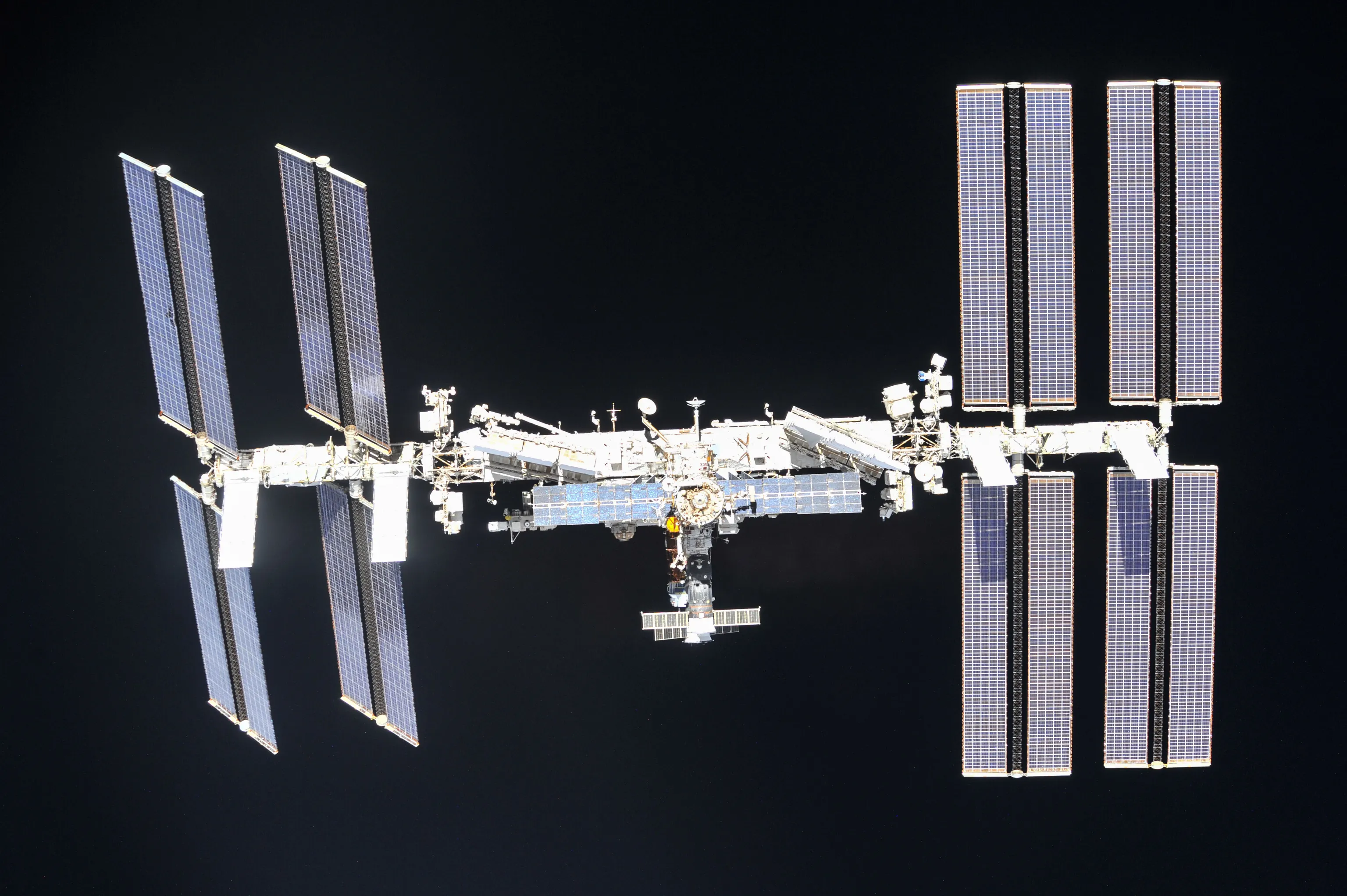
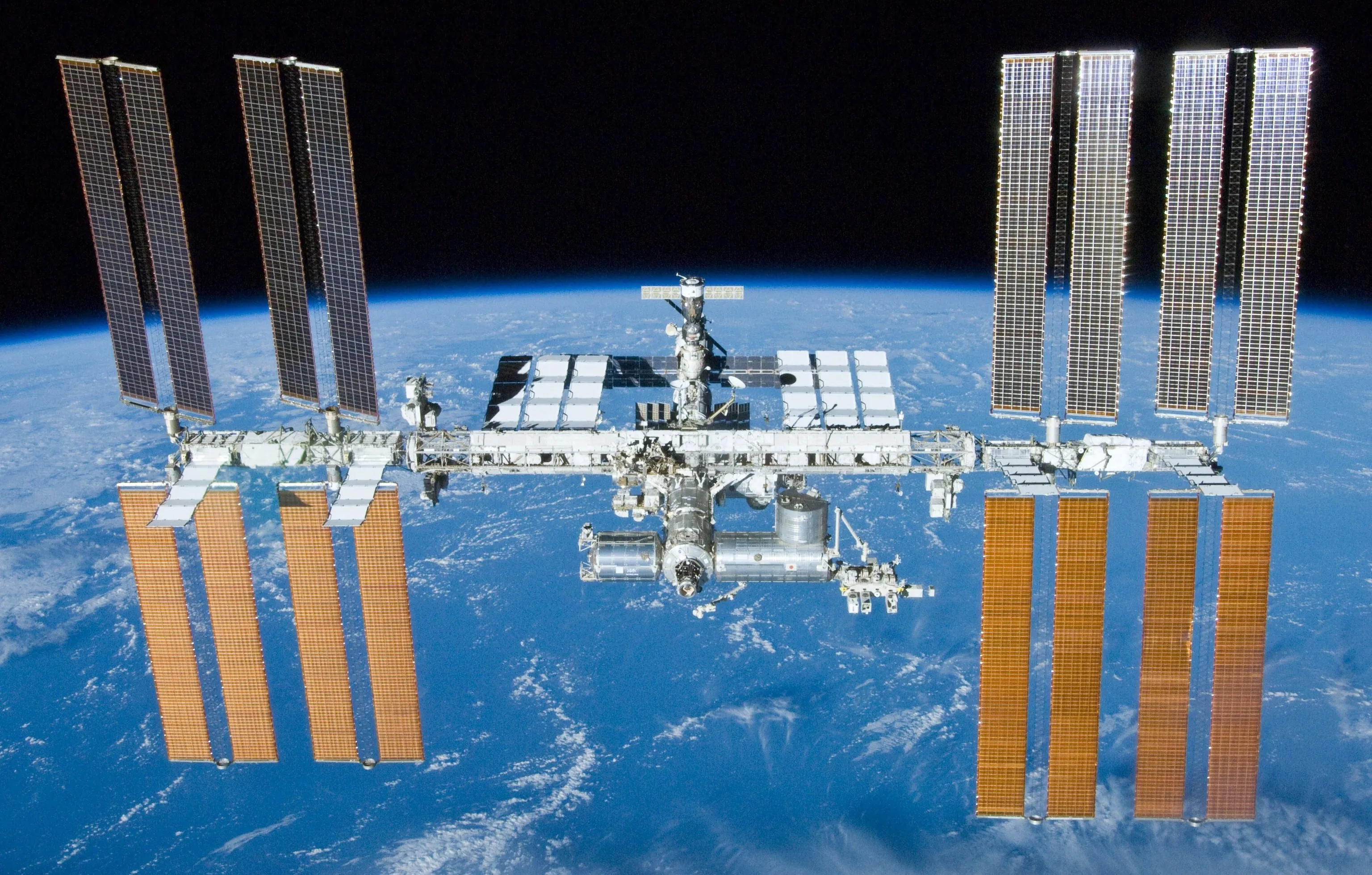
Everything in this atlas leads here. The International Space Station is not a fresh start but a convergence — the point where the two separate histories of human spaceflight, American and Soviet, finally merged into a single structure and a single crew. Its Russian half descends directly from Salyut and Mir; its American half from Skylab; it was assembled by the Space Shuttle, is crewed by Soyuz, resupplied by the descendants of the Progress freighter, and carries laboratories built by Europe and Japan. Nearly every program that came before it is present in it, physically, as heritage bolted into orbit.
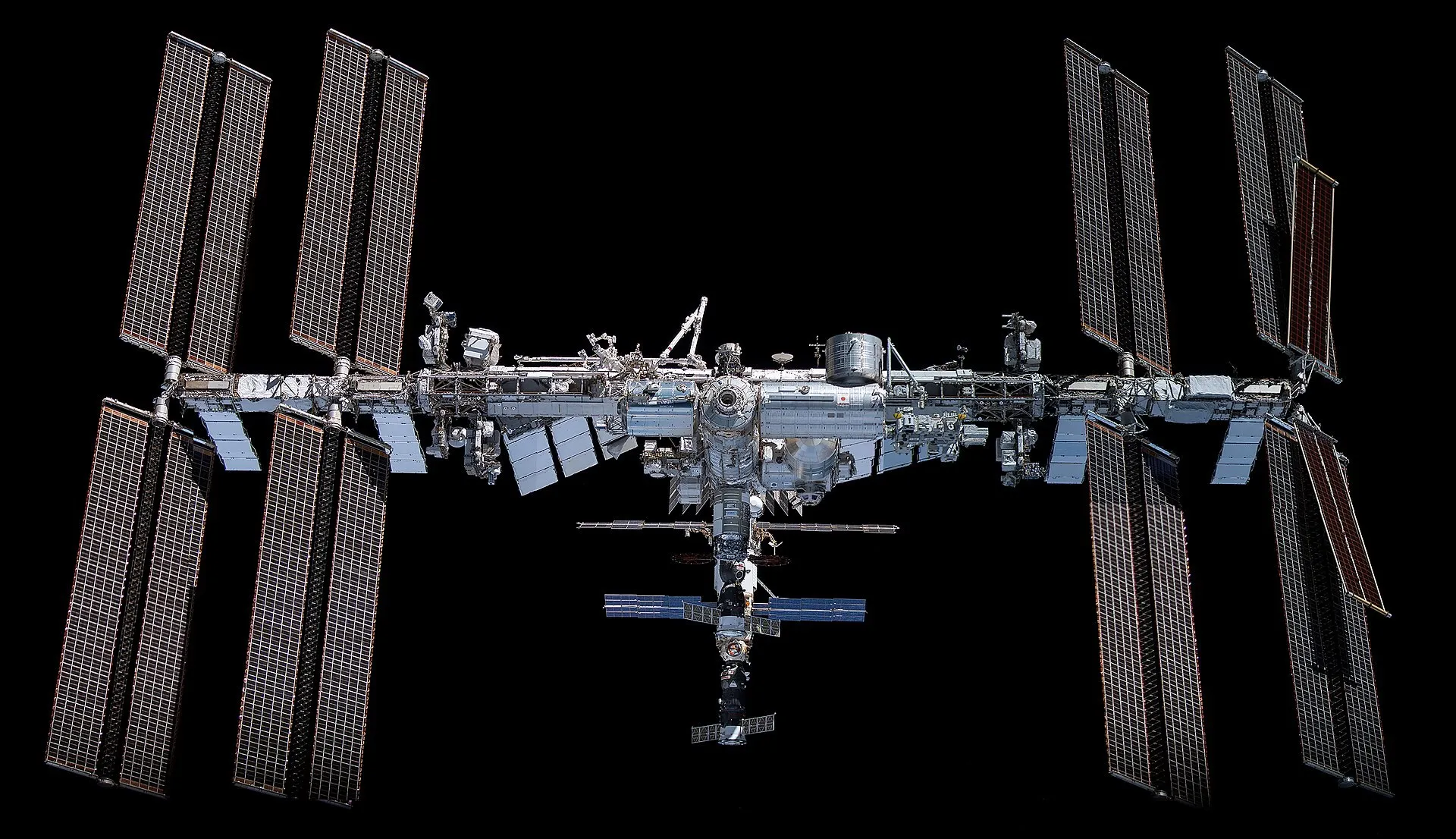
It is also the largest and most complex object ever built in space, and the most expensive — a structure the size of a football field, assembled over more than a decade from modules launched separately and joined in orbit, sustained continuously by a fleet of spacecraft from many nations. But the deepest thing about it is not its size. It is that the two superpowers who spent four decades trying to beat each other to every first in space decided, when the racing was finally over, to build the greatest thing either had ever attempted together — and have kept it crewed, without a single day's break, for over twenty years.
Goals
The Station's goals were three, and they braided together. The first was scientific: a permanent, continuously-staffed laboratory in microgravity, large enough and enduring enough to do research that short flights never could — on the human body, on materials, on biology, on the long-duration questions that any journey to Mars must answer. The second was operational: to master, at last and at scale, the thing every station program had been climbing toward — a genuinely permanent human presence, sustained indefinitely by international resupply and crew rotation.
The third goal was political, and in the 1990s it was arguably the most urgent. As the Soviet Union collapsed, the West feared its rocket engineers might sell their skills to any regime that would pay. Binding Russia into a shared, indispensable, decades-long project — one where its unmatched station expertise was needed and valued — was a deliberate act of statecraft as much as engineering. The ISS was built partly to give the former enemy a reason to cooperate, and it worked: the Station has kept American and Russian spaceflight entwined through terrestrial quarrels that severed almost everything else.
Outcome
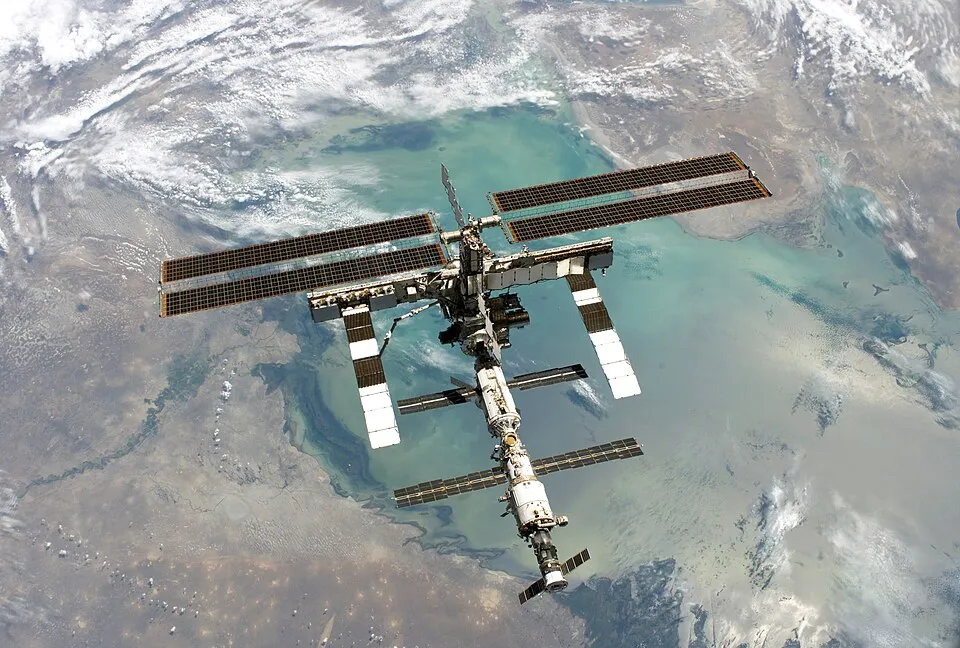
The Station was assembled between 1998 and 2011, module by module, across more than forty launches by the Space Shuttle and Russian rockets — an in-orbit construction project of a scale and difficulty never attempted before or since. Since Expedition 1 arrived on 2 November 2000, it has been continuously inhabited: for more than two decades there has not been a single moment when no human being was living off the Earth. Over 270 people from more than 20 countries have lived and worked aboard it, and it has hosted tens of thousands of experiments across every field of science.
In its operation, every lesson of every earlier program comes due at once. Its modular assembly is Mir's idea, scaled up and internationalised. Its resupply-and-refuel logistics are Salyut's, matured. Its continuous occupation and its long-duration science extend Skylab and Mir. Soyuz still ferries its crews, exactly as it ferried them to Salyut fifty years ago; Progress and its Western cousins — Europe's ATV, Japan's HTV, America's Cygnus and Dragon — keep it stocked. The Station is not merely the successor to the station programs; it is their sum, running all their hard-won techniques simultaneously and reliably.
The story
The central story of the ISS is convergence, and it is worth tracing thread by thread. The Russian segment — the Zarya and Zvezda modules at the Station's core — is the direct descendant of the DOS lineage that ran from Salyut 1 through Mir; Zvezda is essentially the next Mir core module. The American segment inherits Skylab and the Shuttle that built it. Columbus is Europe's, the fruit of the path that ran through Spacelab and the ATV; Kibo is Japan's. The crews arrive on Soyuz, the spacecraft that has been carrying cosmonauts since 1967, and increasingly on commercial Dragons. To understand the ISS is to see all of these programs still operating, fused into one.
The other great theme is the transformation of rivalry into cooperation. The space race was a contest to be first; the ISS is a project that can only exist by being shared. No single nation now funds a permanent human presence in orbit alone — the cost and complexity are simply too great — and so the Station is held up by a standing agreement among rivals to keep cooperating even when little else survives between them. That is a genuinely new thing in the history of spaceflight: not a race won, but a commons maintained, decade after decade, by nations that do not otherwise trust each other.
And the Station is now a hinge to the future. Commercial spacecraft have taken over the job of reaching it, ending the era in which only governments could fly crews and beginning the handover of low Earth orbit to private operators. Its own end is in sight — a controlled deorbit planned for around 2030 — with commercial stations meant to succeed it and the lunar Gateway carrying the international-partnership model onward to the Moon. The ISS is both the culmination of the first age of human spaceflight and the bridge to the next.
What it gave back
The ISS's legacy is the proof, at the largest scale, of two ideas this atlas returns to again and again: that a permanent human presence in space is achievable, and that the greatest things in space are built together rather than alone. It is the longest continuous human occupation of anywhere beyond Earth, the foundation of nearly everything now known about living and working in orbit for the long term, and the operational and scientific groundwork on which any journey to the Moon or Mars will be built. Everything the station programs spent fifty years learning is validated here, running at once and without pause.
Its diplomatic legacy may matter as much as its scientific one. For a quarter of a century the Station has kept the world's spacefaring nations — above all the United States and Russia — working together in orbit through wars, sanctions, and collapses of trust on the ground. It stands as the clearest evidence that cooperation can achieve what competition cannot, and that a shared endeavour, once built, can hold rivals together long after the reasons they started it have faded. When it is finally brought down, what it proved will outlast it: that the next steps — the Moon, and eventually Mars — are things humanity will take together.
What we can learn
The Station's first lesson is that cooperation achieves what competition cannot. No nation now builds a permanent human presence in space by itself, because the scale and cost exceed what any single budget will bear — and so the largest structure ever built in orbit exists only because former rivals chose to share it. The space race produced brilliant, brief triumphs; the ISS has produced two unbroken decades of presence. For the hardest and most expensive endeavours, pooling effort is not a compromise on ambition. It is the only way the greatest ambitions get realised at all.
The second lesson is that nothing in spaceflight starts from scratch. The ISS is the sum of every program before it — Salyut's resupply, Mir's modularity, Skylab's science, the Shuttle's assembly, Soyuz's reliability, Europe's and Japan's laboratories — none of it invented anew, all of it inherited and combined. The deepest truth of the space age is that its achievements are cumulative: each program stands on the ones before, and the Station stands on them all. Progress in space is not a series of fresh beginnings but a single, continuous act of building, carried forward hand to hand across generations and across borders.
Assembly — module by module
- 1998 Zarya (FGB) The first module — a US-funded, Russian-built control and power block: the seed of the entire station.
- 1998 Unity (Node 1) The first US module, a six-port connecting hub joined to Zarya two weeks later.
- 2000 Zvezda The Russian service module that made the station habitable: crew quarters, life support, and propulsion.
- 2001 Destiny The US laboratory — the primary research module and the station's command center.
- 2001 Canadarm2 Canada's robotic arm, which assembled much of the station and catches arriving spacecraft.
- 2001 Quest The US airlock, enabling spacewalks in both American and Russian suits.
- 2001 Pirs A Russian docking compartment and airlock — deorbited in 2021 to make room for Nauka.
- 2007 Harmony (Node 2) The hub that opened the way for the international laboratories.
- 2008 Columbus Europe's laboratory — ESA's cornerstone contribution to the station.
- 2008 Kibo Japan's laboratory — the largest single module, with its own external platform.
- 2009 Poisk A Russian docking and airlock module on Zvezda's zenith.
- 2010 Tranquility (Node 3) Life support and exercise equipment — and the mount for the Cupola.
- 2010 Cupola The seven-windowed observation dome, source of the station's most famous views of Earth.
- 2010 Rassvet A Russian docking and storage module.
- 2011 Leonardo (PMM) A permanent storage module, converted from a reusable cargo carrier.
- 2016 BEAM An experimental inflatable module, testing expandable habitats in orbit.
- 2021 Nauka The long-delayed Russian science module, added more than two decades after assembly began.
- 2021 Prichal A Russian docking node — among the most recent additions.
Missions
- 2000 Expedition 1 the first resident crew arrived 2 November 2000; humans have lived aboard continuously ever since — the longest unbroken human presence off Earth in history
- 2020 Commercial Crew SpaceX's Crew Dragon restored US crew launch after nine years, beginning the handover of low-orbit access to commercial providers
Hardware
- Iss the assembled station