ISRO · India · 2013–2022
Mangalyaan
India reached Mars on its first attempt — the first country ever to do so — for less than the cost of a Hollywood movie about space.
Robotic campaign COMPLETED
The land
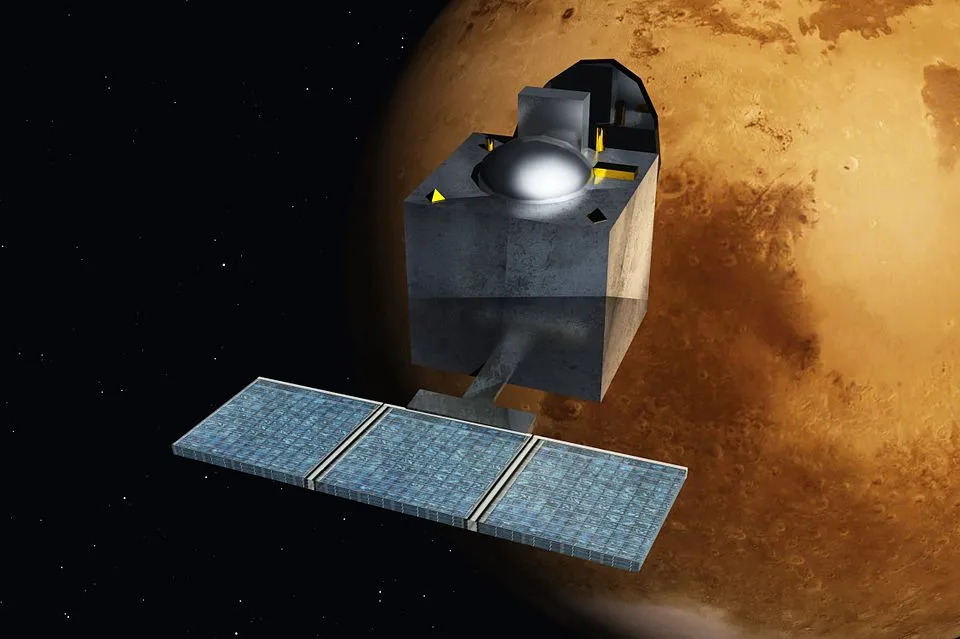
Mars is where space programs go to fail. More missions have been lost on the way to Mars than have succeeded there; the United States, the Soviet Union, and Japan all crashed, missed, or fell silent on their early attempts. Reaching Mars orbit on a first try was something no country had ever managed — ESA's Mars Express orbiter succeeded in 2003, but as a multinational agency, not a single country. In September 2014 India did exactly that, with a spacecraft called Mangalyaan — Sanskrit for "Mars craft" — built by an agency that had never sent anything beyond the Moon, making it the first country to reach Mars orbit on its debut mission and the first to do so with indigenously developed propulsion.
The Mars Orbiter Mission was, on paper, a modest technology demonstrator: a small orbiter with a light instrument load, meant mainly to prove that ISRO could navigate to Mars and enter orbit at all. But it succeeded so completely, so cheaply, and so improbably that it became something much larger — a symbol of what a frugal, disciplined space program could do, and a moment of national pride watched by hundreds of millions of Indians live.
Goals
The primary goal was capability, not science: to demonstrate that India could design, launch, and navigate a spacecraft across the interplanetary gulf and insert it precisely into Mars orbit — the specific technologies of deep-space communication, autonomous operation far from Earth, and a single make-or-break orbit-insertion burn that most first attempts get wrong. If those worked, everything else was a bonus.
The unstated goal was to do it cheaply enough to be repeatable. ISRO built and flew Mangalyaan for roughly 74 million dollars — a figure that became world-famous for being less than the budget of the film Gravity, and a small fraction of NASA's contemporaneous MAVEN Mars mission. The point was not just to reach Mars but to prove that reaching Mars need not cost a fortune, opening interplanetary science to nations that could never afford the traditional price.
Outcome
It worked on the first attempt — the outcome that made it historic. Mangalyaan launched in November 2013, cruised for ten months, and on 24 September 2014 fired its engine and slipped into Mars orbit exactly as planned. India became the first country to reach Mars orbit on its debut mission, the first Asian nation to reach Mars orbit, and did so for a cost that reset global expectations about what interplanetary exploration has to cost.
And then it kept going. Designed to last six months, the orbiter operated for roughly eight years, returning images and atmospheric data about Mars — a full-color view of the whole disc, dust storms, the tenuous upper atmosphere — long after its demonstration goals were met. A mission built to prove a point quietly became a durable science platform, finally falling silent only around 2022 when its propellant and power ran out.
The outcome's largest effect was on perception. Mangalyaan showed a global audience that the club of Mars-capable nations was no longer closed to the wealthy few, and that ISRO — long underestimated as a regional agency — could deliver an interplanetary first. It turned India, in a single burn, into a recognized deep-space power.
The story
The narrative of Mangalyaan is frugality as a superpower. Its famous low cost was not luck or corner-cutting but a deliberate engineering culture: reuse of proven components, a small and focused spacecraft, a modest instrument suite, efficient trajectories that traded time for propellant, and lean teams working to tight budgets. India did not reach Mars cheaply by doing less well; it reached Mars cheaply by a discipline of simplicity that larger programs, with more money to spend, rarely impose on themselves.
It is also a story about the meaning of a first. Mangalyaan's science was real but limited; its historic weight came from being first — first-try success, first Asian nation, first at a famously low price. Firsts of that kind are partly symbolic, and their value is partly national pride, but they are not empty: they demonstrate a capability, establish a place at the table, and inspire a generation. India's Mars arrival did all three at once.
And it belongs to the same shift as Chandrayaan — the arrival of a multipolar deep space. For decades interplanetary exploration was the preserve of two superpowers and then a handful of wealthy agencies. Mangalyaan, reaching Mars on a shoestring, was proof that the frontier had opened to determined newcomers — that the map of who explores the solar system was being redrawn, and India had put itself firmly on it.
What it gave back
Mangalyaan's first legacy is the record itself: the first country to reach Mars orbit on its debut mission, and the first Asian nation at Mars. That is a permanent entry in the history of exploration, and a foundation of national confidence that has driven ISRO's subsequent ambition, from Chandrayaan-3 to the crewed Gaganyaan program.
Its second legacy is the cost precedent. By reaching Mars for tens of millions rather than hundreds, ISRO changed the global conversation about what interplanetary missions must cost — an example that lowers the perceived barrier to entry for every emerging space nation, and pressures the established ones to justify their prices.
And its third is inspiration. Mangalyaan's success, watched live across India, drew a generation toward science and engineering and established space as a source of national pride — a soft-power dividend that outlasts the spacecraft itself.
What we can learn
The lesson of Mangalyaan is that constraint, embraced as discipline, can produce results that money alone does not. India reached Mars on the first try not despite its small budget but partly because of the simplicity that budget forced — a focused spacecraft, proven hardware, and a refusal to over-complicate. Frugality made the mission both affordable and, in its very leanness, robust.
The deeper lesson is that a first-try success at Mars is as much about humility as ambition. The graveyard of failed Mars missions is full of well-funded programs that reached too far; ISRO reached exactly as far as it could reliably manage, proved that, and let the mission exceed its own modest goals. Aiming precisely, rather than aiming high, is sometimes how the hardest firsts are won.
Missions
- 2014 the Mars Orbiter Mission enters Mars orbit on its first attempt — India becomes the first nation ever to succeed at Mars on its debut try, and the first Asian nation to reach Mars at all
- 2014 The cost the whole mission cost about 74 million dollars — less than the Hollywood film Gravity, and a fraction of comparable Western Mars missions
- 2022 Eight years on station designed for six months, the orbiter worked for roughly eight years before contact was finally lost — a small technology demonstrator that became a long-lived science mission
Hardware
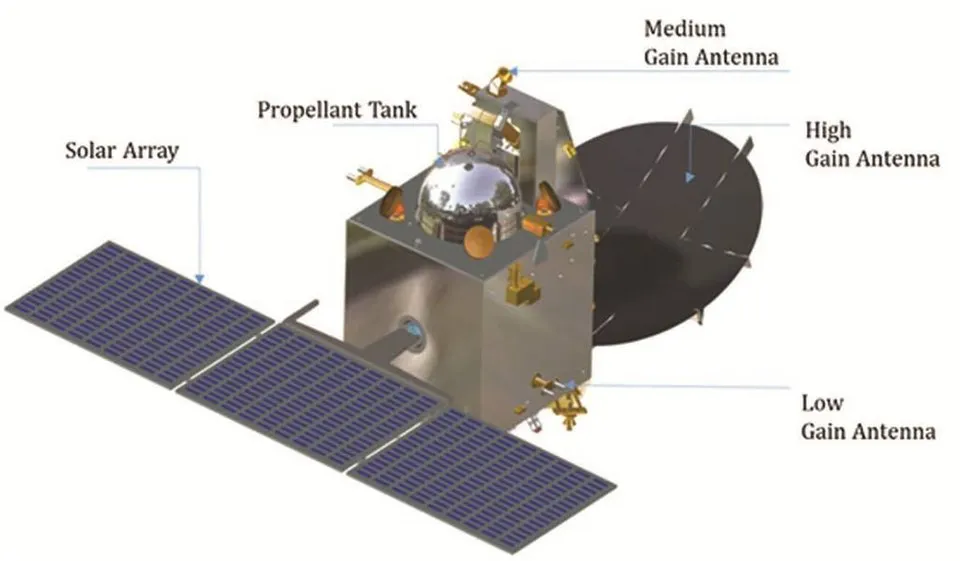
- Mangalyaan Mars orbiter