NASA · USA + partners · 1990–now



The Great Observatories
NASA's plan to see the whole universe — four flagship telescopes, one for each kind of light, and the lineage of great space eyes that followed.
Robotic campaign ACTIVE
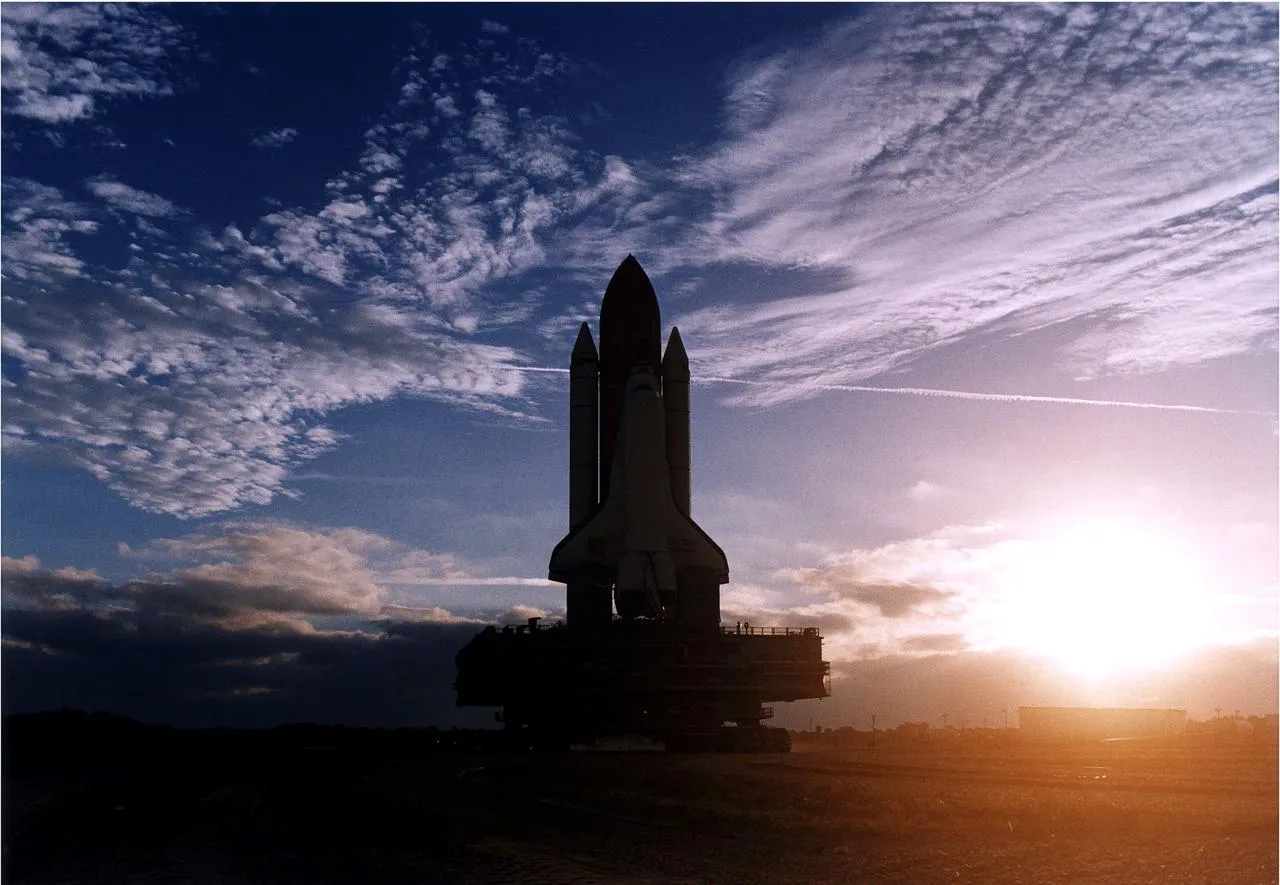
The land
The light the universe gives off is not just the visible colours our eyes evolved to catch. The hottest, most violent objects shine in X-rays and gamma rays; the coldest, dustiest, most distant ones glow only in the infrared. To see the cosmos whole, you need eyes for every band of the spectrum — and, crucially, you need them above the atmosphere, which absorbs most of those wavelengths before they reach the ground. In the 1980s NASA set out to build exactly that: a coordinated set of flagship space telescopes, each optimized for a different slice of light.
The result was the Great Observatories program — four spacecraft, deliberately conceived as a family: Hubble for visible and ultraviolet, Compton for gamma rays, Chandra for X-rays, and Spitzer for the infrared. Between roughly 1990 and 2003 all four reached orbit, and for the first time humanity could look at the same object across the entire electromagnetic spectrum at once. Officially, those four are 'the Great Observatories.' But from our vantage decades later, they read as the opening chapter of a single, continuing NASA project: the building of ever-greater eyes in space.
Goals
The founding goal was spectral completeness. A galaxy, a black hole, a dying star looks radically different in each band of light, and any one telescope tells only part of the story. By fielding four complementary observatories, NASA could assemble a full picture — the visible starlight, the X-ray fury of matter falling into black holes, the gamma-ray flashes of the most extreme events, and the infrared glow of cold dust and the earliest, most redshifted galaxies — of the same objects, the same universe, seen every way it can be seen.
The lineage's goal, as it extended past the original four, has been to keep pushing that vision deeper and wider. The Nancy Grace Roman Space Telescope, the next entry planned in the NASA line, trades Hubble's narrow, deep stare for an enormous field of view — the same sharpness across a patch of sky over a hundred times larger — built to survey the universe at scale, mapping dark energy and hunting exoplanets across vast areas rather than studying one target at a time.
Outcome
All four originals flew and delivered, and three of the four vastly outlived their planned lifetimes. Hubble, launched by the Space Shuttle in 1990 and famously rescued from a flawed mirror by astronauts, has operated for more than three decades and rewritten astronomy. Chandra revealed the X-ray universe of black holes and galaxy clusters. Spitzer opened the infrared sky. Only Compton was lost early, deliberately de-orbited in 2000 after a gyroscope failed. The program did what it set out to do: it gave humanity, for the first time, eyes across the whole spectrum.
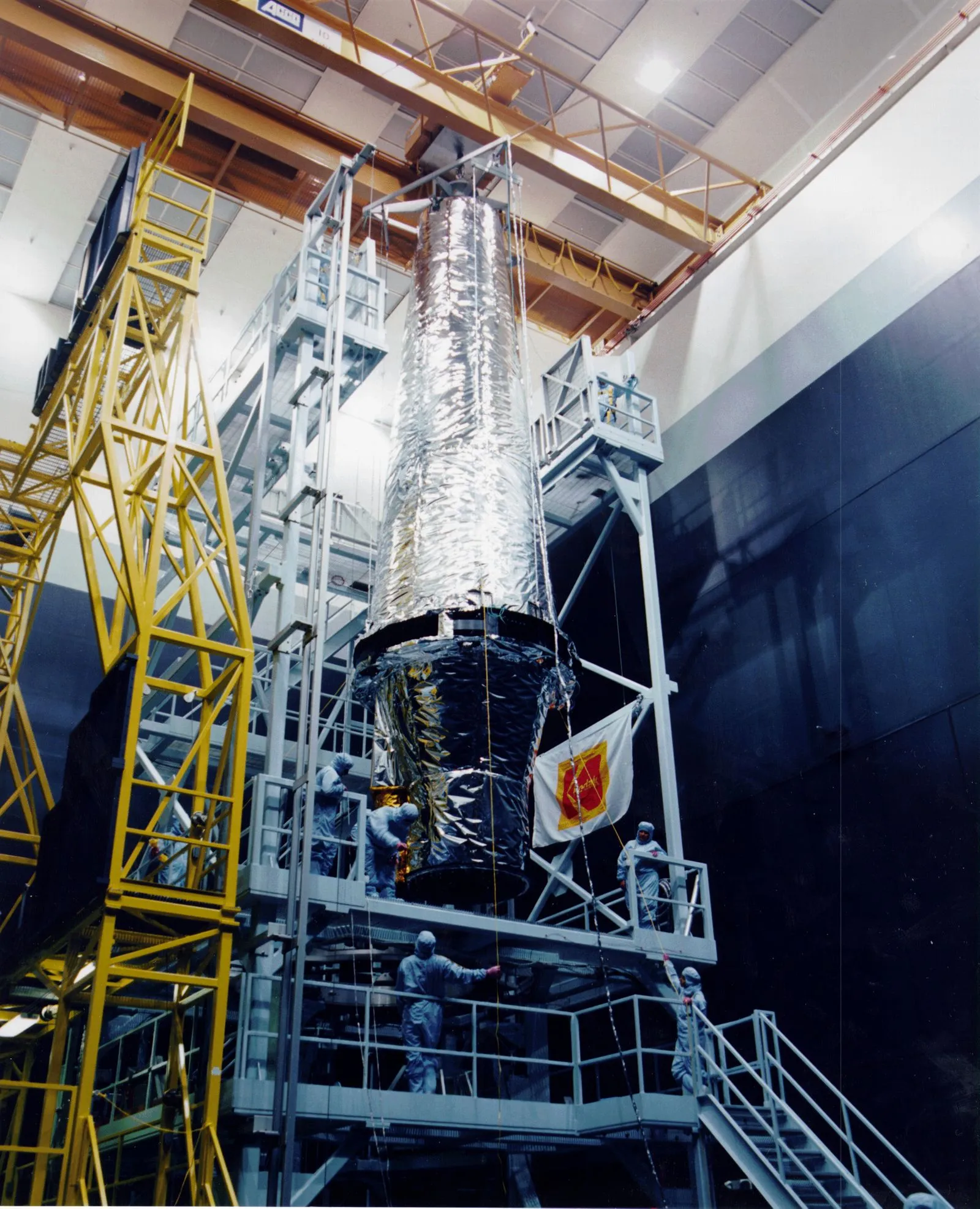
The scientific harvest is almost too large to summarize: the accelerating expansion of the universe, the confirmation of supermassive black holes at galactic centers, the age and composition of the cosmos pinned down, the atmospheres of exoplanets first probed, the deepest images ever taken of the early universe. Much of what a modern person knows about what the universe looks like comes, directly or indirectly, from these four telescopes and the ones that followed them.
The story
The story of the Great Observatories is the story of a single good idea — see every kind of light, from above the air — pursued patiently across decades. The original four were a deliberate, coordinated set; but the idea did not stop with them. Each generation of great space telescope inherits the same ambition and pushes it further: sharper, colder, wider, deeper. From our perspective the program is less a closed list of four than an ongoing NASA tradition of building the largest eye the technology of the moment allows.
Hubble is the emotional center of that tradition. Its near-failure and dramatic repair, its images that became cultural touchstones, its sheer longevity made it the telescope the public knows by name — and proved that a space observatory could be not just a scientific instrument but a shared human window on the cosmos. Every telescope in the lineage is measured, fairly or not, against what Hubble did to our sense of where we are.
The lineage also branches. The James Webb Space Telescope — Hubble's infrared successor, and a genuinely international flagship built with Europe and Canada — is a chapter large and distinct enough to stand on its own, covered separately in this atlas. Roman continues the NASA line here. The point is not the exact boundaries of the family tree but the continuity of the ambition: humanity, decade after decade, building better eyes and pointing them at everything.
What it gave back
The first legacy is the modern picture of the universe itself. The accelerating cosmos, the black holes, the ages and distances, the first exoplanet atmospheres, the deepest fields — the Great Observatories and their successors are where an enormous fraction of what we know about the universe was actually seen. They are the instruments behind the textbook.
The second is a proven model for how to see comprehensively: complementary telescopes across the spectrum, above the atmosphere, studying the same universe every way it radiates. That multi-wavelength approach is now simply how astronomy is done, and the coordination the original four pioneered is the standard every observatory campaign follows.
And the third is Hubble's cultural legacy — the transformation of deep space from an abstraction into imagery that anyone can recognize. The Great Observatories made the universe visible, in the fullest sense: not only measured, but seen, and made part of how humanity pictures its own home.
What we can learn
The lesson of the Great Observatories is that seeing whole requires seeing in every kind of light. No single telescope, however powerful, captures more than a slice of what an object is; the leap in understanding came from looking at the same universe across the entire spectrum at once. Completeness, not any one instrument, was the breakthrough.
The deeper lesson is the value of a sustained tradition over a single triumph. The program's real power is not the four original telescopes but the continuity of ambition they began — a decades-long commitment to keep building greater eyes. Individual missions age and die; the tradition of always building the next, better observatory is what keeps the view expanding.
Missions
- 1991 Compton Gamma Ray Observatory the gamma-ray member of the original four — it mapped the most violent events in the universe until it was deliberately de-orbited in 2000
- 2026 Nancy Grace Roman the next in the NASA lineage — a wide-field infrared survey telescope with a field of view over a hundred times Hubble's, built to map the universe rather than stare at one patch of it