ESA · Multi (Europe) · 2004–now

ESA — Space Science
Europe's robotic science fleet — the first spacecraft to land on a comet, the most precise map of the galaxy ever made, and a telescope hunting the dark universe.
Robotic campaign ACTIVE
The land
The European Space Agency's human spaceflight is done in partnership — modules on the ISS, astronauts flown on others' rockets, a share of Artemis. But in robotic science, ESA leads in its own right, running some of the most ambitious deep-space missions ever flown. Where NASA's science is vast and broad, ESA's tends to be precise and audacious: a small number of missions attempting things no one had ever done, executed with a patience measured in decades.
Three missions capture the character of it. Rosetta chased a comet for ten years and then did something never attempted before — orbited it and landed on it. Gaia has spent a decade making the most accurate three-dimensional map of the Milky Way in history, pinning down the positions of nearly two billion stars. And Euclid is surveying a third of the entire sky to trace the invisible scaffolding of dark matter and the mysterious force pulling the universe apart. Together they are Europe's argument that it belongs at the front of space science.
Goals
The goals are as varied as the missions, but each targets a first-rank scientific question. Rosetta set out to understand comets — pristine leftovers from the solar system's birth — by escorting one through its closest approach to the Sun and sampling it directly. Gaia's goal is the map itself: a precise census of the galaxy's stars that underpins nearly all of modern astronomy, because you cannot understand the Milky Way until you know where its stars actually are and how they move.
Euclid's goal is the darkest: to map how the universe's structure has grown over cosmic time, and from that to constrain what dark matter and dark energy actually are — the roughly 95% of the universe that is neither stars nor atoms and that no one understands. It is a mission aimed squarely at the biggest open question in physics, attacked with the patient, survey-everything method that European science has made its signature.
Outcome
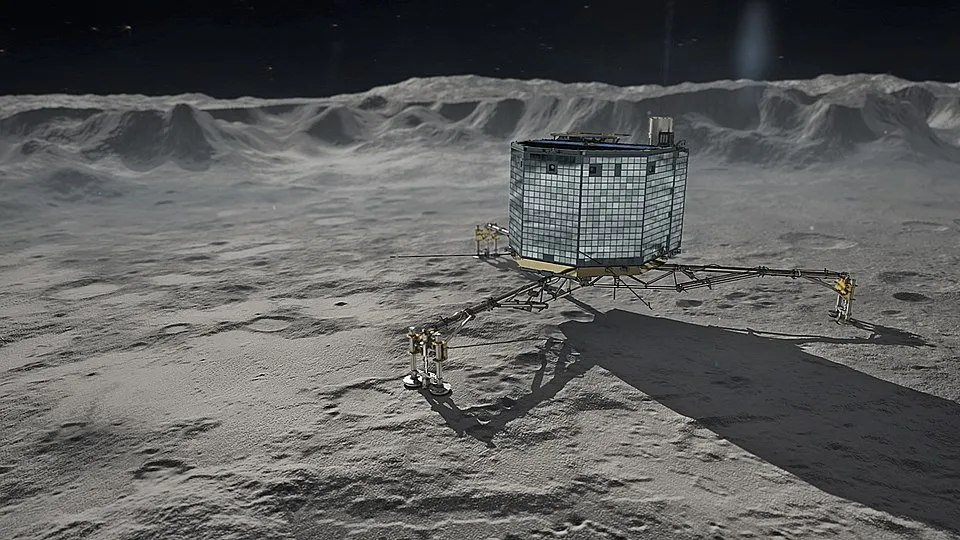
Rosetta's 2014 arrival at comet 67P, after a ten-year, six-billion-kilometre chase that slingshot past Earth and Mars to build up speed, was one of the great moments of modern spaceflight. Its Philae lander bounced across the low-gravity surface and came to rest in shadow, its batteries running down within days — a partial, dramatic success — but the Rosetta orbiter itself escorted the comet for two years through its fiery passage around the Sun, returning a transformative picture of what comets are made of and how they behave.
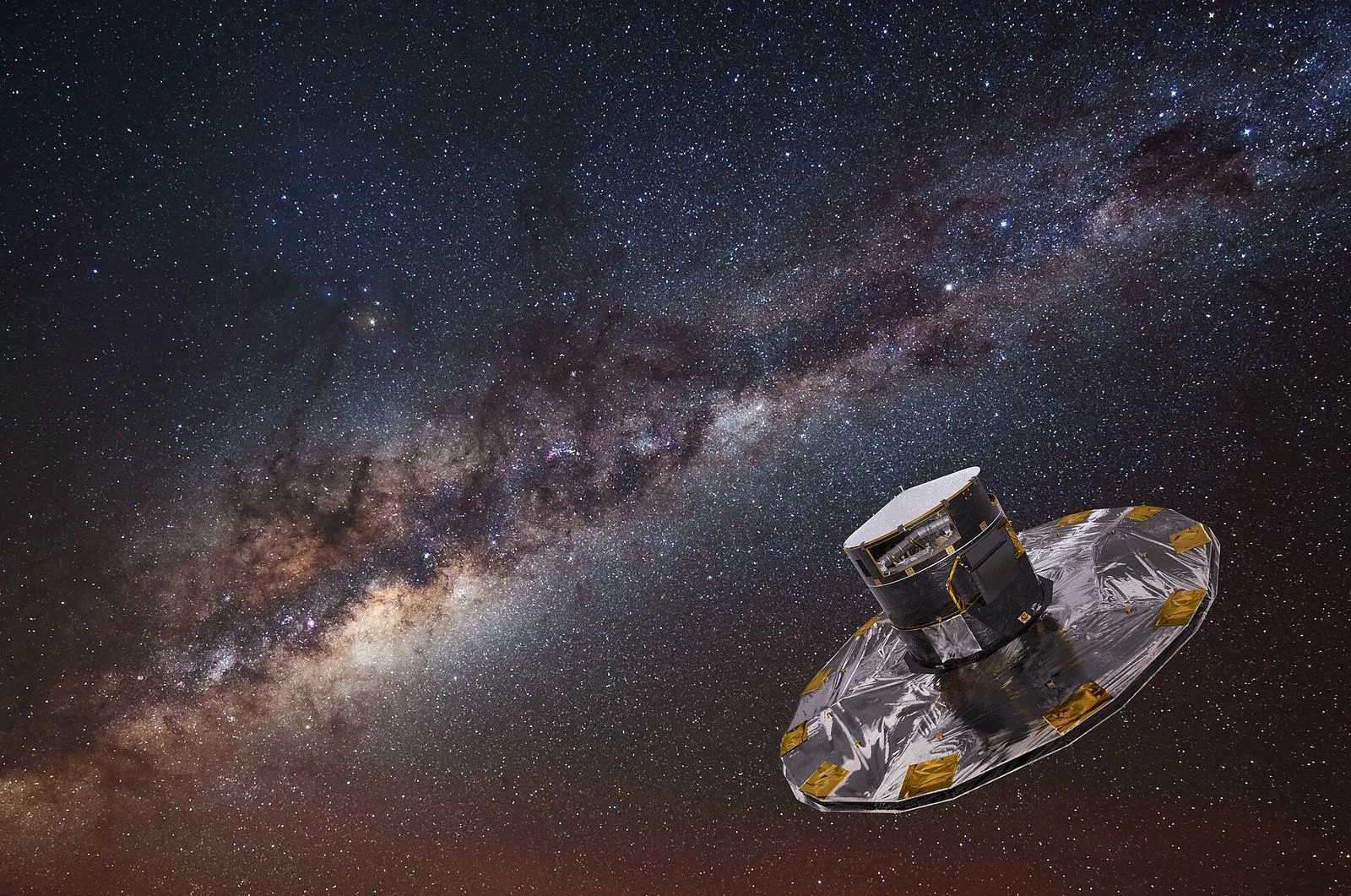
Gaia's data releases have quietly reshaped astronomy: its star map is now the reference frame almost every other observation is calibrated against, revealing the Milky Way's structure, hidden streams of ancient merged galaxies, and the motions that will play out over millions of years. Euclid, newer, is already returning sky surveys of staggering depth and breadth. Between them, ESA's science fleet has delivered firsts — the comet landing, the galactic map — that stand among the most significant robotic achievements of the era.
The story
The thread through ESA's science is patience at a scale few programs attempt. Rosetta's mission was two decades from approval to comet, ten of them spent simply flying to the target, including nearly three years in hibernation to save power. Gaia's value only emerged after years of accumulating measurements. This is science as a long game — missions that demand a continuity of funding and purpose across a decade or more, and a willingness to wait for a payoff that arrives all at once, near the end.
It is also science defined by doing one hard thing supremely well. ESA does not try to match NASA's breadth; it picks a small number of missions and makes each a genuine first or a definitive instrument. Landing on a comet had never been done; Gaia's precision had never been achieved; Euclid's survey is unmatched in scope. The strategy is depth over quantity — a European specialty of turning a focused mission into a landmark.
And it is deeply collaborative and international, in the European manner — missions built across many member states, often flown in partnership with NASA, launched on Europe's own Ariane rockets, and feeding a scientific community that spans the continent. ESA's science is a demonstration that a coalition of nations, pooling resources, can produce results that rival or exceed what any single one of them could achieve alone.
What it gave back
ESA's science leaves a legacy of firsts and foundations: the first comet landing, which proved that even the smallest, most irregular bodies can be reached and touched; and Gaia's galactic map, which has become the reference frame underpinning modern astronomy, used by nearly every observatory on Earth and in space.
Its deeper legacy is a model of ambitious, patient, focused science — a small number of missions, each attempting a genuine first, sustained across decades. That model has made Europe a leader in robotic exploration despite budgets well below NASA's, and a partner the larger agencies actively seek out.
And through Euclid and the dark-universe work, ESA is positioned at the frontier of the biggest unanswered question in physics — what the universe is actually made of. Whatever the answer, Europe's survey telescopes will be central to finding it.
What we can learn
The lesson of ESA's science is that patience is a scientific instrument. Missions like Rosetta and Gaia deliver nothing for years and then everything at once, and they are only possible for an organization willing to commit to a decade-long payoff. The willingness to wait — to fund and fly a mission whose results arrive near its end — is itself a capability, and one Europe has made a specialty.
The deeper lesson is that focus beats breadth for a mid-sized power. ESA cannot do everything NASA does, so it does a few things no one else has done — land on a comet, map the galaxy, survey the dark universe — and becomes a leader through depth rather than scale. Picking the right hard problem, and solving it definitively, is how a coalition punches above its budget.
Missions
- 2014 after a ten-year chase, Rosetta orbits comet 67P and drops the Philae lander onto its surface — the first spacecraft ever to orbit and land on a comet
- 2016 Gaia's map Gaia begins releasing the most precise three-dimensional map of the Milky Way ever made — the positions, distances and motions of nearly two billion stars
- 2023 Euclid opens its eyes a telescope built to survey a third of the sky and map how dark matter and dark energy have shaped the universe