Commercial · USA (commercial) · 2025–now


Commercial Stations
The private outposts meant to replace the ISS — a bet that low Earth orbit can become a business, not just a government program.
Station PLANNED
The land
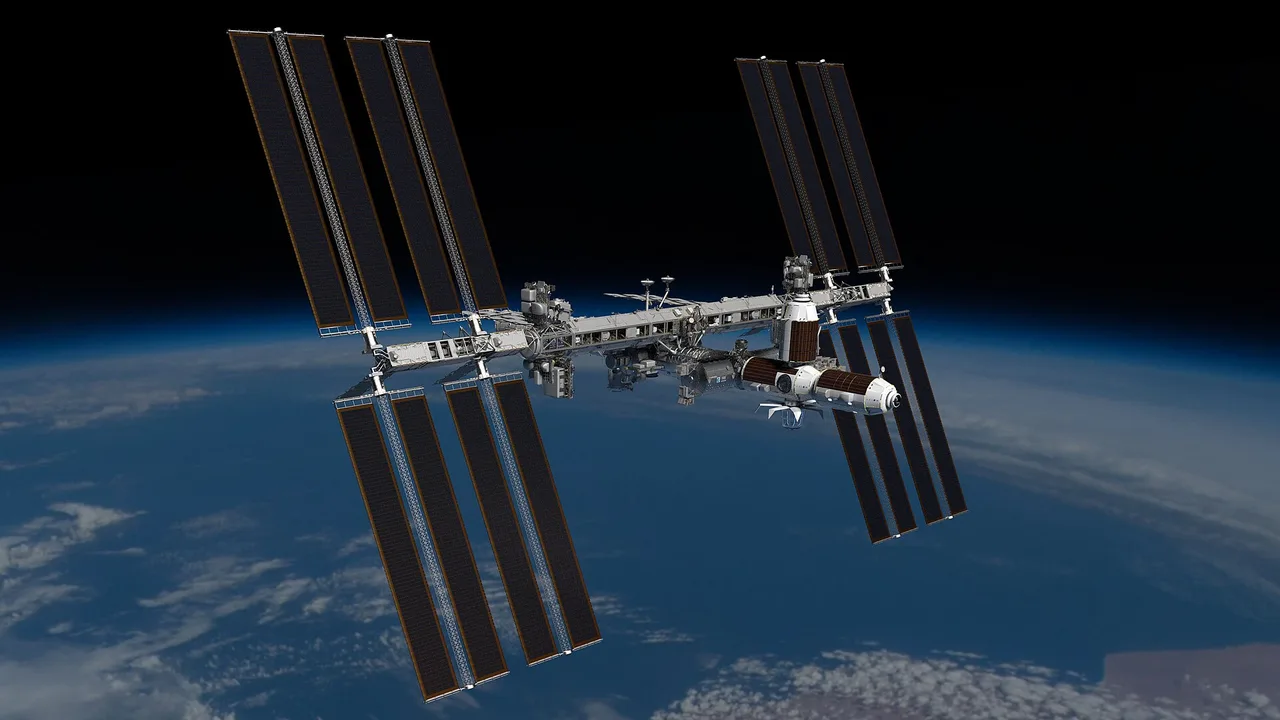
The International Space Station is the largest thing humanity has ever built in orbit, and it is going to be deliberately destroyed. Around 2030, after more than three decades of continuous crewed operation, the ISS will be guided down to burn up over the Pacific — because it is aging, expensive to maintain, and its partners have decided the future of low Earth orbit belongs to private companies rather than government agencies. The Commercial Stations are what is supposed to take its place.
This is a genuine change in model, not just in hardware. For sixty years, space stations were built and run by nations. The plan now is for NASA and its partners to stop operating stations altogether and instead buy time aboard privately-owned ones — the same handover that gave commercial companies the job of launching cargo and crew, extended to the destination itself. Several ventures are racing to build the outposts NASA and others will rent: Axiom Station, Orbital Reef, Starlab, and more.
Goals
The immediate goal is continuity: to have at least one commercial station operating before the ISS is deorbited, so that human presence in low Earth orbit — unbroken since 2000 — is never interrupted. Losing that continuity would mean surrendering a hard-won capability and, symbolically, ceding the low-orbit high ground at exactly the moment China's station is the only other one flying.
The deeper goal is to turn low Earth orbit into a self-sustaining economy. The vision is stations that pay for themselves through paying customers — research for companies and agencies, in-space manufacturing of things that can only be made in microgravity, and private astronauts and tourists — so that a human presence in orbit no longer depends on government budgets. NASA becomes one tenant among many, and the station becomes a business.
There is also a strategic goal wrapped inside the commercial one: to keep an American-led human presence in low orbit as the ISS ends and China's Tiangong continues. The commercial stations are meant to ensure that the retirement of the ISS is a handover, not a withdrawal — that the West does not simply leave low Earth orbit to China by default.
Outcome
The outcome is still unwritten — these are, for now, contracts, designs, and test articles rather than flying stations. The plans are real and funded: Axiom is building an independent free-flyer, with only its first module docking briefly to the ISS before detaching to join the rest of the station in free flight — a plan restructured in late 2024 that dropped the earlier vision of assembling modules permanently at the ISS and then departing. Orbital Reef and Starlab are designing independent outposts, and Vast's Haven-1 — a single-module free-flyer — is among the most likely to fly first. But no commercial station is yet in orbit, and the timelines are tight against the ISS's planned end, with the usual risk that a paper station slips while the deadline does not.
The central uncertainty is not engineering but economics. It is not obvious that there is enough paying demand — research, manufacturing, tourism — to sustain even one private station, let alone several, once the deep pockets of a government anchor tenant are removed. The commercial-station era is a bet that a market exists where, so far, only a government program has. Whether that bet pays off is the question the next decade will answer.
What is already clear is that the model has momentum and official backing. NASA has committed to becoming a customer rather than an operator, several well-funded companies are competing, and the ISS's fixed retirement date gives the whole effort a hard deadline. The commercial stations may slip, consolidate, or partly fail — but the intent to hand low Earth orbit to the private sector is firm.
The story
The commercial-station push is the last step in a long handover. First NASA handed cargo delivery to SpaceX and others; then crew transport; now the destination itself. Each step transferred a capability from a government that pioneered it to companies meant to run it more cheaply and open it to more users. The stations are the endpoint of that logic — the moment low Earth orbit stops being something governments operate and becomes something they buy.
It is also a wager about markets that has failed before. Previous attempts to build a commercial economy in low orbit found that, outside government contracts, paying demand was thin. The current effort is better funded and better timed — riding cheaper launch and a real deadline — but it is attempting the same hard thing: to prove that orbit can be a business. The ISS was never expected to turn a profit; its successors are supposed to, and that is a genuinely new and unproven demand.
And it unfolds against a clock and a rival. The ISS's retirement is scheduled; China's Tiangong is flying and will not retire with it. The commercial stations are being built to ensure the West does not exit low Earth orbit just as a competitor settles in — which loads a business proposition with strategic weight, and raises the question of what happens if the market proves too thin but the strategic need remains.
What it gave back
If the commercial stations succeed, their legacy will be the transformation of low Earth orbit from a government program into an economy — a permanent human presence sustained by paying customers rather than national budgets, and a template for how every future orbital destination might be owned and run.
If they struggle, their legacy will be a hard lesson about the limits of commercialization: that some capabilities, however desirable, may not yet have a market that can sustain them without a government anchor — and that the handover of low orbit may need to be slower, or subsidized longer, than the ISS's deadline allows.
Either way, they mark the end of the ISS era and the test of a new model. The commercial stations are where the long experiment of privatizing access to space meets its hardest question — not whether a company can reach orbit, but whether it can profitably live there.
What we can learn
The lesson the commercial stations are testing is whether a capability pioneered by governments can be handed to a market that does not yet demonstrably exist. Launch had obvious customers; a permanently-crewed station's business case is far less proven. The effort is a real-time experiment in whether commercialization has limits, and where they lie.
The deeper lesson, still forming, is about the danger of retiring a capability before its replacement is secure. The ISS has a fixed end date; its commercial successors do not yet fly. Betting that a market will materialize on schedule, with a hard deadline and a rival already in orbit, is a gamble whose stakes are nothing less than continuous human presence in low Earth orbit itself.
Missions
- 2021 Commercial LEO Destinations NASA funds several companies to build private stations, planning to become a customer of orbital outposts rather than the operator of one
- 2027 Vast Haven-1 a single-module commercial free-flyer by Vast — among the earliest commercial stations expected to reach orbit
- 2027 Axiom Station Axiom Space assembles as an independent free-flyer; its first module docks briefly to the ISS then detaches to join later modules in free flight — plan restructured in Dec 2024
- 2027 Orbital Reef a Blue Origin and Sierra Space venture pitched as a 'mixed-use business park' in orbit — research, manufacturing, and tourism
- 2029 Starlab a Voyager and Airbus station designed as a single large free-flyer, aimed at continuous science after the ISS
- 2030 ISS retirement the ISS is to be deorbited around 2030; the commercial stations are meant to be flying before it goes, so human presence in low orbit is never interrupted