CNSA · China · 2007–now

Chang'e — China's Moon Program
The methodical conquest of the Moon: orbit, land, rove, return — including the first landing ever on the far side, and the first samples from it.
Robotic campaign ACTIVE
The land
While the United States was away from the Moon for fifty years and Russia's lunar program lay dormant, China quietly built the most sustained and successful campaign of robotic lunar exploration of the twenty-first century. Named for the Chinese goddess of the Moon, the Chang'e program has, step by deliberate step, done everything a robotic program can do at another world — orbited it, landed on it, driven across it, and brought pieces of it home — and then done the things no one had ever done at all.
The program's signature is the same patient, incremental method that built the Tiangong stations: each mission is a rehearsal for the next, each capability proven before the next is attempted. Orbit first (Chang'e 1–2), then soft-land and rove (Chang'e 3), then reach the impossible far side (Chang'e 4), then return samples (Chang'e 5), then return samples from the far side (Chang'e 6). It is a ladder climbed rung by rung, and China has not missed a rung.
Goals
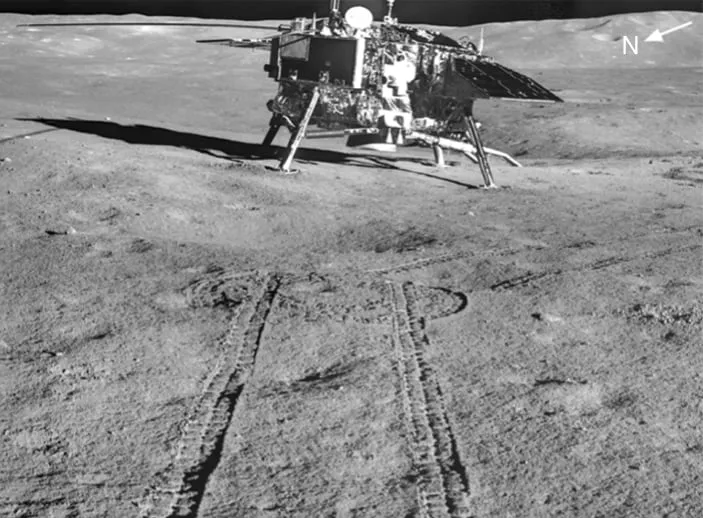
The near-term goals are scientific and methodical: map the Moon, land softly, deploy rovers, and return samples — mastering each capability in turn. The far side of the Moon, which never faces Earth and so cannot communicate with it directly, was a specific and audacious target: reaching it required first placing a relay satellite beyond the Moon, and no nation had ever landed there before China did it in 2019.
The long-term goals are far larger: to land Chinese astronauts on the Moon by 2030, and to build the International Lunar Research Station — a robotic-then-crewed base near the lunar south pole, developed with international partners as an explicit alternative to the American-led Artemis coalition. The robotic Chang'e missions are the reconnaissance and the proof of capability; the crewed base is the destination the whole program is climbing toward.
Outcome
The record is a near-unbroken string of firsts and successes. Chang'e 1 and 2 mapped the Moon. Chang'e 3 (2013) made the first soft landing since 1976, carrying the Yutu rover. Chang'e 4 (2019) achieved the first landing in history on the lunar far side. Chang'e 5 (2020) returned the first fresh lunar samples in 44 years. And Chang'e 6 (2024) returned the first samples ever collected from the far side — material that had never been held in human hands. No other lunar program of the era comes close to this run of achievement.
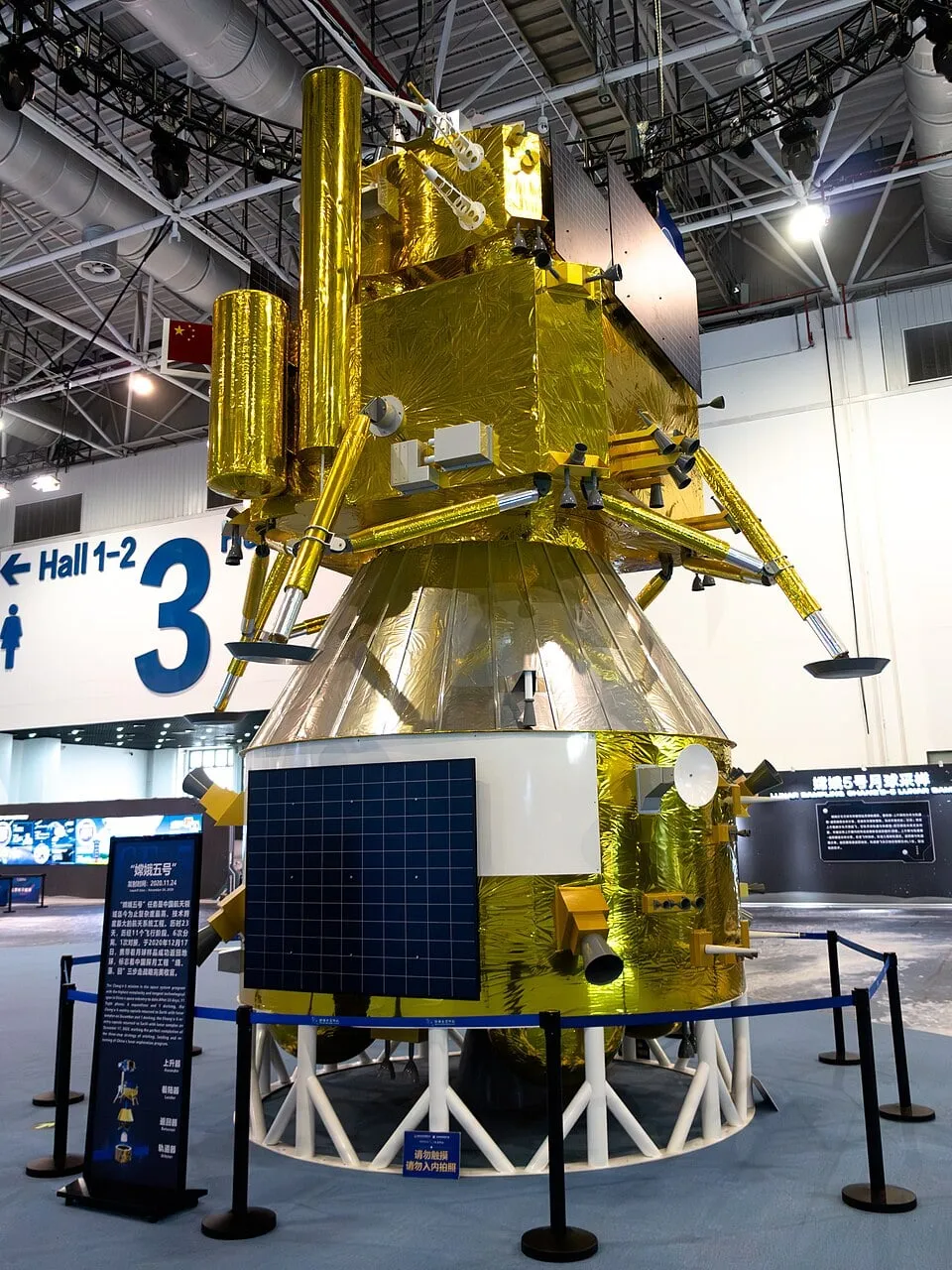
The samples alone have reshaped lunar science, revealing volcanic activity far more recent than models predicted and returning far-side material that may finally explain why the Moon's two hemispheres are so different. And the program's success has made China the pacing threat that reanimated the American lunar program: Artemis exists, in part, because China demonstrated it could and would go to the Moon — and stay.
The story
The story of Chang'e is a program that treated the Moon as a sequence of problems to be solved in order, and solved them. There was no rush to plant a flag, no single dramatic sprint — just a steady, published progression through orbiting, landing, roving, and returning, each mission building precisely on the last. The far-side landing is the purest expression of the method: reaching it required first solving the communication problem with a relay satellite, so China solved that first, then landed. The audacity is real, but it is always earned by preparation.
It is also the robotic vanguard of a larger ambition. The Chang'e missions are not an end in themselves; they are the reconnaissance for crewed landings and a permanent base. Every soft landing, every sample return, every far-side first is a capability China will need to put people on the Moon and keep them there — and the program is explicitly structured as the robotic first half of a plan whose second half is human.
And it is one half of a new race. For the first time since Apollo, two powers are driving hard for the Moon at once — China's Chang'e-and-crewed program and America's Artemis — both aiming for the same resource-rich south pole, both building coalitions, both on timelines that converge around 2030. Chang'e's quiet, methodical success is the reason that race exists, and China's steadiness makes it a formidable competitor in it.
What it gave back
Chang'e's first legacy is scientific: fresh lunar samples from both near and far sides after a half-century gap, already rewriting the Moon's volcanic history and offering the first direct clues to why its two hemispheres differ so profoundly. These are among the most valuable planetary samples returned in a generation.
Its second legacy is the first human access to the lunar far side — a place that had been utterly unreachable, opened by the simple, clever step of a relay satellite. Chang'e turned the hidden half of the Moon from an abstraction into explored ground.
And its third is the reanimation of the Moon race itself. China's methodical success is a principal reason the United States committed to Artemis and to returning humans to the Moon on a deadline. Chang'e did not just explore the Moon; it changed the strategic calculus that governs who else goes, and when.
What we can learn
The lesson of Chang'e is that a patient, published ladder of capability can outperform a dramatic sprint. China did not try to leap to the hardest goals; it climbed to them, proving orbiting before landing, landing before roving, roving before sample return — and by the time it attempted the truly unprecedented, the far-side landing and sample return, it had earned every prerequisite. Method, sustained over two decades, produced a run of firsts no rival matched.
The deeper lesson is that quiet competence reshapes the field. Chang'e made no grand proclamations and won no race for headlines, yet its steady success did more to restart human lunar ambition worldwide than any speech — because a program that simply keeps succeeding, mission after mission, becomes a strategic fact that everyone else has to answer. Consistency, in the end, is its own kind of power.
Missions
- 2007 China's first Moon mission — an orbiter that mapped the lunar surface and announced China as a lunar power
- 2013 China's first soft landing on the Moon, carrying the Yutu rover — the first spacecraft to land there since the 1970s
- 2018 Queqiao relay a satellite placed beyond the Moon to relay signals from the far side, which never faces Earth — the enabling trick behind Chang'e-4 and -6
- 2019 the first spacecraft ever to land on the far side of the Moon — a place that cannot see Earth, reached using the Queqiao relay satellite
- 2020 China's first lunar sample return — the first fresh Moon rocks brought to Earth by anyone since 1976
- 2024 the first sample return from the far side of the Moon — material no one had ever held before
- 2030 Crewed landing China's stated goal of landing astronauts on the Moon before 2030, using a new deep-space crew capsule and lander
- 2035 ILRS the International Lunar Research Station — China's planned robotic-then-crewed base at the lunar south pole, built with international partners as an alternative to Artemis
Hardware
- Yutu 2 far-side rover