Roscosmos · Russia · 2028–now

Russian Orbital Station
Russia's planned return to a station of its own — built first docked to the ISS, then, eventually, flying under no partner's rules again.
Station PLANNED
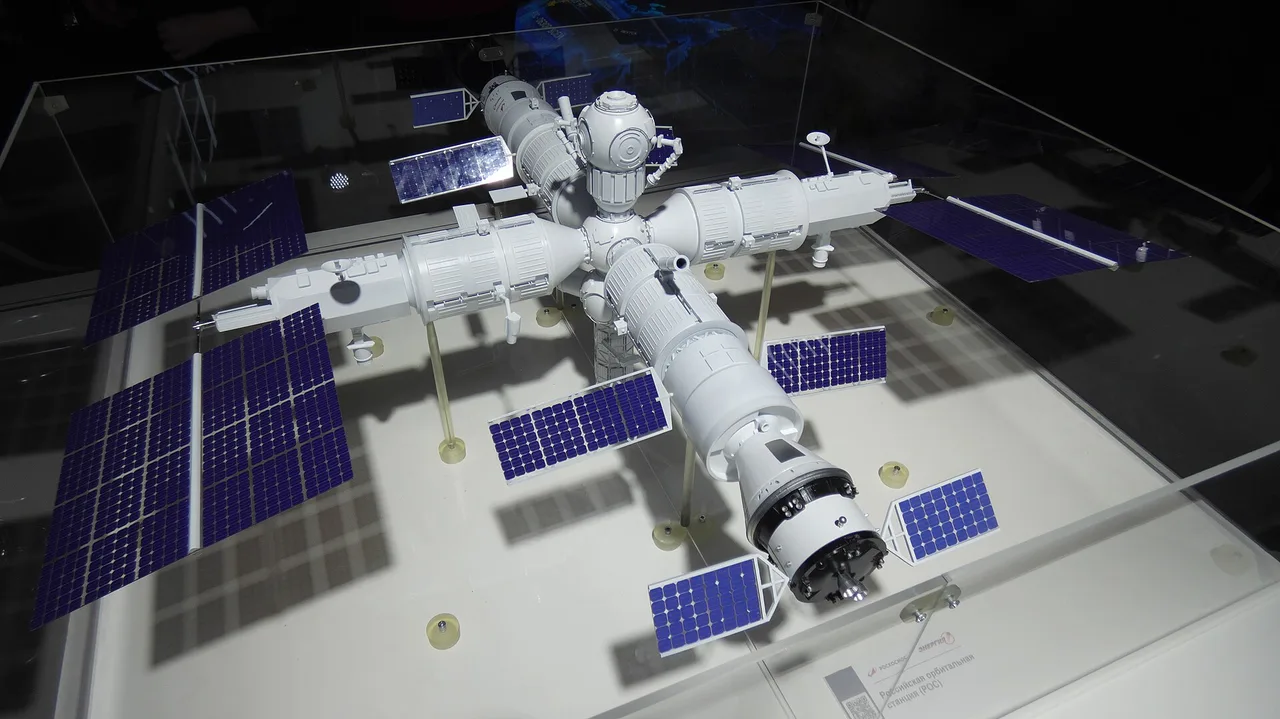
The land
For a quarter of a century, Russia's human spaceflight has been bound to the West's. Its half of the International Space Station — descended directly from Salyut and Mir — kept the whole outpost alive, and for nine years Russian Soyuz capsules were the only ride to the ISS for anyone, American or Russian. That partnership, one of the most durable legacies of the end of the Cold War, is now ending. Russia has announced it will leave the ISS and build a national station of its own: the Russian Orbital Station.
It is, in one sense, a return to type. Before the ISS, Russia and the Soviet Union always flew their own stations — the Salyut series and then Mir, the first modular station. The ROS is a plan to go back to that model of independence: a Russian station crewed by Russian cosmonauts, answerable to no partner in the end. The move is as much geopolitical as technical, a consequence of the collapse of cooperation between Russia and the West.
Goals
The primary goal is independence — a station Russia controls entirely, ending its reliance on a partnership that has become politically untenable. The station was originally planned for a high-inclination near-polar orbit chosen deliberately to pass over all of Russian territory, including the Arctic — an orbit the ISS never reaches. That plan was reversed in 2025: Roscosmos announced the first ROS modules will instead assemble while docked to the ISS, meaning the station begins life sharing the ISS's 51.6° orbital plane before eventually flying alone.
A stated design goal is a station that does not require continuous crew. Rather than the permanently-occupied model of Mir and the ISS, the ROS is envisioned as visited periodically, with much of its work automated between crews — a response to the cost of continuous occupation and the practicalities of a program with far less funding than the Soviet space effort once commanded.
Underneath the technical goals is a strategic one: to preserve Russia's status as an independent human-spaceflight power as the ISS ends. Without a station of its own, Russia would be left with a crew capsule and no destination — a spacefaring nation with nowhere to send its people. The ROS is the plan to keep Russia in orbit on its own terms, rather than fading from human spaceflight as its partnership dissolves.
Outcome
The outcome is entirely ahead of it — the ROS is, for now, an announcement and a set of plans, not hardware in orbit. Russia has declared its intent to withdraw from the ISS later this decade and to begin launching ROS modules toward the end of the 2020s, but the program faces real questions of funding, industrial capacity, and timeline in a Russia under heavy sanctions and economic strain. Whether the station is built on schedule, built late, or scaled back is genuinely uncertain.
What is certain is the direction: Russia intends to leave the ISS and fly alone. The partnership that outlasted the Cold War is being wound down, and the ROS — whatever form it finally takes — is the vehicle for Russia's post-partnership human spaceflight. It represents the end of an era of cooperation and the reassertion of a much older Russian model of self-reliance in orbit.
The risk the program carries is the one every ambitious station plan carries, sharpened by circumstance: that the announcement outruns the budget. Russia's space program has contracted sharply since Soviet times, and building a new station from scratch is expensive and slow. The ROS may fly, or it may become the station Russia meant to build — a marker of intent that reality could not fund.
The story
The story of the ROS is the unwinding of a partnership that once symbolized peace. The joining of the American and Russian station programs into the ISS was one of the great gestures of the post-Cold-War world — former rivals building the largest structure in orbit together, keeping it crewed without a break for over twenty years. The ROS is the reversal of that gesture: a decision, driven by a collapse in relations, to separate again and fly apart.
It is also a return to a deep Russian tradition. Long before the ISS, Russia was the world's master of space stations — Salyut proved the concept, Mir perfected the modular design that the ISS itself inherited. The ROS is framed, in part, as a homecoming to that heritage: Russia flying its own station again, as it always did, drawing on the longest and deepest station-building experience of any nation.
And it is shadowed by constraint. The Soviet space program that built Mir commanded resources the modern Russian program does not, and the ROS must be built under sanctions, with a shrunken industrial base, on a budget a fraction of NASA's. The plan is real and the heritage is genuine — but the gap between the ambition and the means is the central tension of the program, and the thing that will determine whether the ROS becomes a station or stays a plan.
What it gave back
The ROS's legacy, if it flies, will be the continuation of Russia as an independent human-spaceflight power into the post-ISS era — a nation that kept a station of its own rather than fading from crewed spaceflight when the partnership ended.
Its symbolic legacy is already real: it marks the formal end of the ISS partnership, one of the last major structures of post-Cold-War cooperation, and the return of human spaceflight to a more divided, more national pattern — Russia, China, and the West each flying their own stations rather than sharing one.
And it is a test of whether Russia's storied station heritage can survive its diminished means. The ROS will show whether the country that built Salyut and Mir can still build a station from scratch under modern constraints — or whether that capability, like so much of the Soviet space legacy, has outrun the resources to sustain it.
What we can learn
The lesson of the ROS is that partnerships in space are as fragile as the politics that underpin them. The ISS cooperation survived two decades and was meant to be a permanent bridge; it is ending because the relationship beneath it broke. No amount of orbital hardware can outlast the terrestrial goodwill that made it possible — a sobering counterpoint to the hope that space cooperation floats above earthly conflict.
The deeper lesson is the distance between announcing a station and flying one. The ROS has heritage, intent, and a clear strategic rationale — and it must still be built under sanctions on a shrunken budget. Ambition is cheap and stations are expensive; the program is a reminder that in spaceflight, the plan is the easy part, and the hard part is paying for it.
Missions
- 2022 Announced Russia declares it will leave the ISS partnership and build its own national station — a return to the go-it-alone model of Salyut and Mir
- 2028 First module the planned launch of the first UUM module of the Russian Orbital Station (ROS); the full station is expected in the late 2020s
- 2028 ISS withdrawal Russia's stated timeline for ending its participation in the ISS and shifting its cosmonauts to its own station