JAXA · Japan · 2007–now

JAXA — Moon and Planets
Japan's ingenious, resource-light exploration of the Moon and planets — famous for missions that fail halfway and get rescued by cleverness.
Robotic campaign ACTIVE
The land
Japan does robotic exploration differently from the superpowers. It flies fewer missions, on smaller budgets, aimed at narrow and often audacious goals — and it has a distinct habit of turning near-catastrophe into triumph through ingenuity. Where NASA builds flagships with deep redundancy and ESA flies large international observatories, JAXA's ISAS institute tends to send one clever, lightly-built spacecraft to do one hard thing, and then improvise brilliantly when something breaks. It usually does break; the missions are famous for being saved.
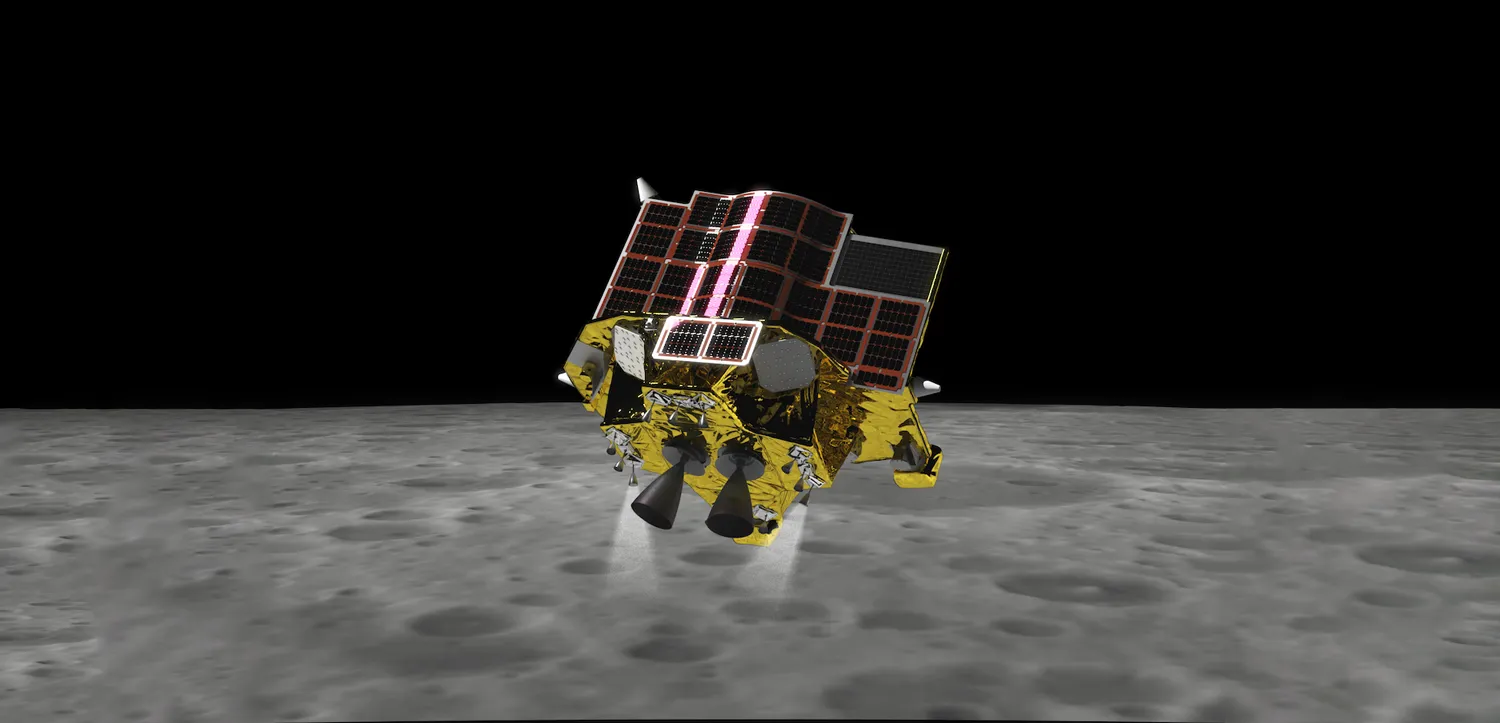
This is the counterpart to Hayabusa's asteroid work: JAXA's exploration of the Moon and the planets. It includes Kaguya, the largest lunar mission since Apollo; Akatsuki, a Venus orbiter that failed at arrival and was recovered five years later; and SLIM, a small lander that touched the Moon with a precision no one had achieved and then kept working upside down. Together they define a national style — lean, focused, and relentlessly resourceful.
Goals
The scientific goals span the inner solar system: map the Moon in fine detail and understand its origin and resources (Kaguya); study the runaway greenhouse and bizarre super-rotating atmosphere of Venus (Akatsuki); and demonstrate that a spacecraft can land exactly where it intends to, rather than merely somewhere safe (SLIM). Each mission targets a specific, well-chosen question rather than attempting broad coverage.
The engineering goal running through all of them is precision and autonomy on a budget — vision-based navigation, careful propellant management, and spacecraft clever enough to be rescued when a critical system fails. JAXA's programs are, in effect, a long argument that you do not need a flagship budget to do frontier science, if you are willing to fly lean and think fast.
Outcome
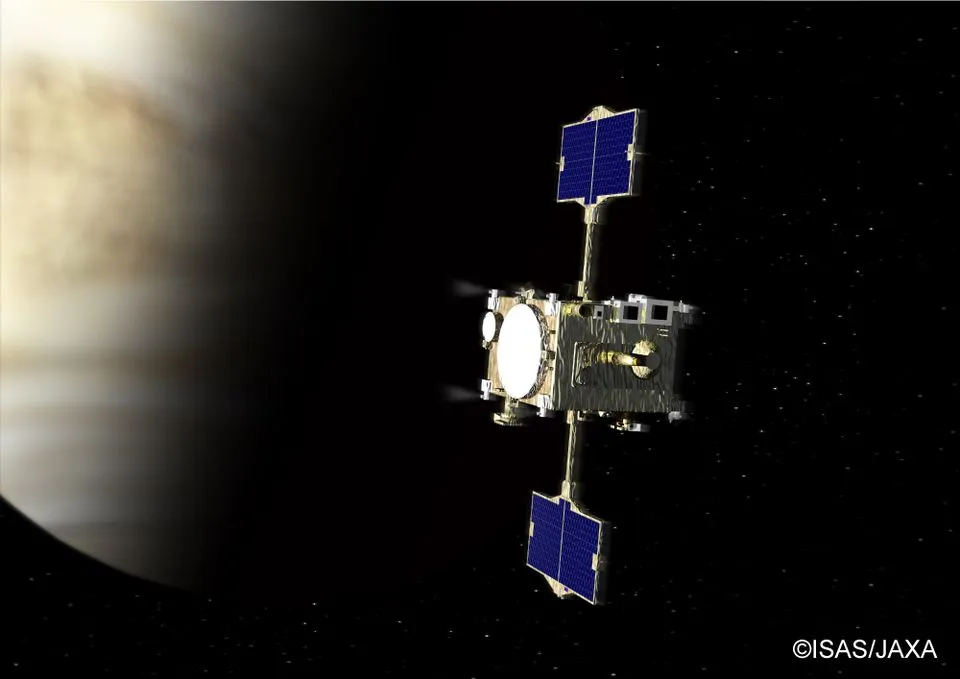
The record is a string of hard-won successes. Kaguya (2007) returned the largest lunar mission's worth of mapping data since Apollo and the first HD footage of an Earthrise. Akatsuki failed its Venus orbit insertion in 2010 when its main engine failed — a total loss by any normal reckoning — and yet, after five years orbiting the Sun, JAXA used the probe's small attitude thrusters to slip it into Venus orbit on a second try, salvaging the mission entirely. SLIM (2024) landed within about 55 metres of its target, tipped onto its side, and still delivered its science.
What these outcomes share is a refusal to accept a failed mission as a lost one. Akatsuki should have been abandoned; SLIM's tipped landing should have ended its science; each was salvaged by teams treating a broken spacecraft as a puzzle rather than a write-off. The results are real planetary science — Venus atmospheric dynamics, detailed lunar geology, demonstrated pinpoint landing — delivered by missions that repeatedly should not have delivered anything.
The story
The narrative of JAXA's robotic program is rescue as a core competency. It is not that these missions fail more than others; it is that JAXA's culture is unusually good at not giving up when they do — at spending months finding a way to fly a crippled spacecraft to its goal anyway. Akatsuki's five-year detour and second orbit-insertion attempt is the purest example: a mission that any conventional program would have declared dead, patiently brought back to full science.
It is also a philosophy of doing more with less. Japan's space science budget is a fraction of NASA's, and its answer is not to attempt less ambitious things but to attempt them more cheaply and cleverly — lean spacecraft, sharp objectives, and a tolerance for the risk that comes with flying without deep redundancy. SLIM is tiny; Akatsuki was modest; Kaguya was efficient. The ambition is in the goals, not the budgets.
And it complements rather than competes. JAXA does not try to match NASA or ESA across the whole board; it picks specific frontiers — asteroid sample return, Venus dynamics, pinpoint landing — and leads or contributes uniquely there, often in partnership. It is the model of a mid-sized space power that earns outsized influence by being excellent at chosen, difficult things rather than adequate at everything.
What it gave back
The first legacy is a body of focused planetary science: the largest lunar mission since Apollo, yielding detailed surface mapping and the first HD Earthrise footage; years of Venus atmospheric data from a probe that should not exist; and a demonstrated pinpoint-landing capability that every future lander — robotic or crewed, at the Moon or beyond — will build on.
The second is a proven style of exploration: lean, precise, and resilient, showing that frontier robotic science does not require a flagship budget, only sharp goals and the ingenuity to rescue missions when they falter. It is a template many smaller and emerging space agencies now look to.
And the third is influence through specialization. By leading in specific hard domains rather than spreading thin, JAXA has made itself a partner the larger agencies need — its techniques and its rescued spacecraft feeding directly into the wider exploration of the Moon and inner planets.
What we can learn
The lesson of JAXA's robotic missions is that a failed arrival is not always a failed mission. Akatsuki and SLIM both suffered failures that would normally end a program, and both delivered their science anyway because their teams treated the broken spacecraft as a problem to solve rather than a loss to accept. Ingenuity applied to a crippled mission can recover most of its value.
The deeper lesson is that ambition and budget are separable. JAXA does frontier science on a fraction of a superpower's funding by choosing narrow, hard goals and flying lean — proof that leadership in exploration is available to anyone willing to specialize deeply and improvise well, rather than only to those who can afford flagships.
Missions
- 2007 Kaguya / SELENE the largest lunar mission since Apollo — a Moon orbiter that mapped the surface in unprecedented detail and shot the first high-definition video of Earth rising over the lunar limb
- 2015 after its orbit-insertion engine failed at Venus in 2010, the probe looped the Sun for five years and, on a second attempt, used its tiny attitude thrusters to slip into orbit — a mission saved from certain loss
- 2024 the 'Moon Sniper' lands within 100 metres of its target — pinpoint precision no one had achieved — then survives a tipped-over touchdown to return science on solar power