Roscosmos · USSR · 1976–1993

Buran
The Soviet space shuttle that looked like America's, flew better in one respect — and flew exactly once, uncrewed and flawless, before the country that built it disappeared out from under it.
Crewed campaign CANCELLED
The land
By the mid-1970s the Soviet Union was watching the United States build the Space Shuttle and drawing an alarming conclusion. It could not quite believe the Americans would spend so much on a reusable spaceplane purely for the reasons stated, and feared a hidden military purpose — a vehicle that could dive into the atmosphere, snatch a Soviet satellite, and fly home, or drop weapons from orbit. Unwilling to be without an answer, the Politburo ordered one of its own. The result, Buran, was the largest and most expensive space project in Soviet history, and it began as a response to a threat that may never have been real.
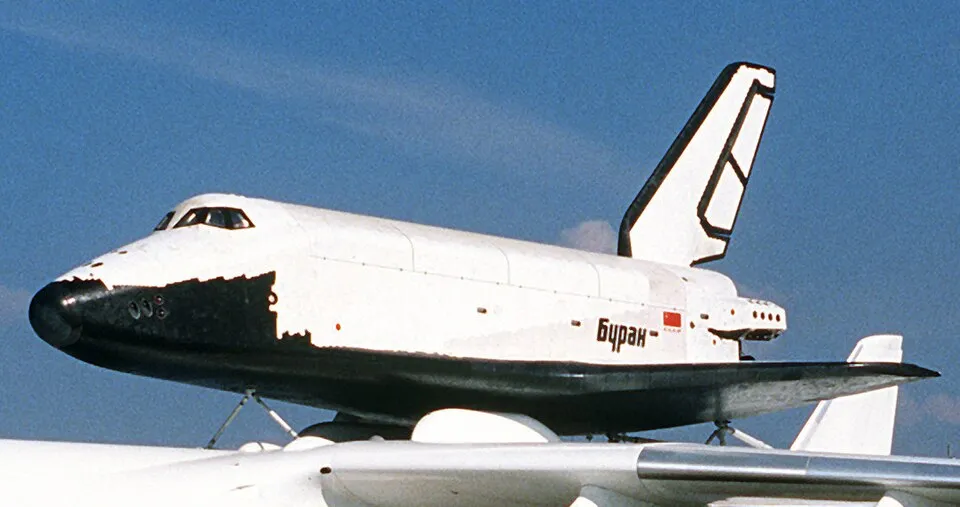
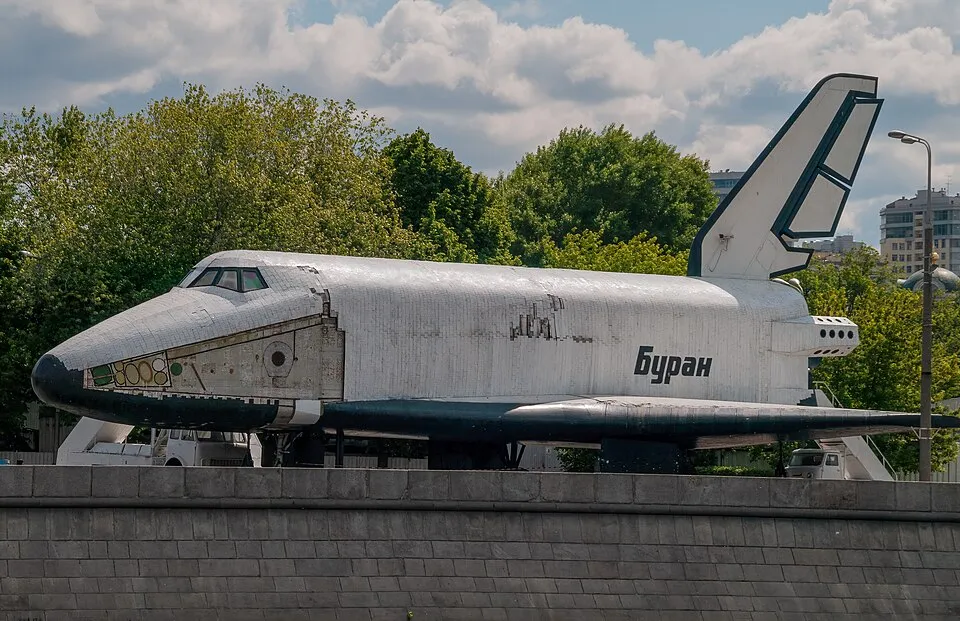
From the outside Buran looked almost identical to the American orbiter — the same delta wing, the same rough shape — because the same job and the same physics of hypersonic reentry drive a design toward the same answer. But underneath, the Soviet engineers made two decisions that set their machine apart, and both, arguably, improved on the original. Buran carried no main ascent engines of its own — it had orbital-manoeuvring engines for use in space, but the heavy lift to orbit was handled entirely by the rocket — and Buran could fly with no one aboard at all.
Goals
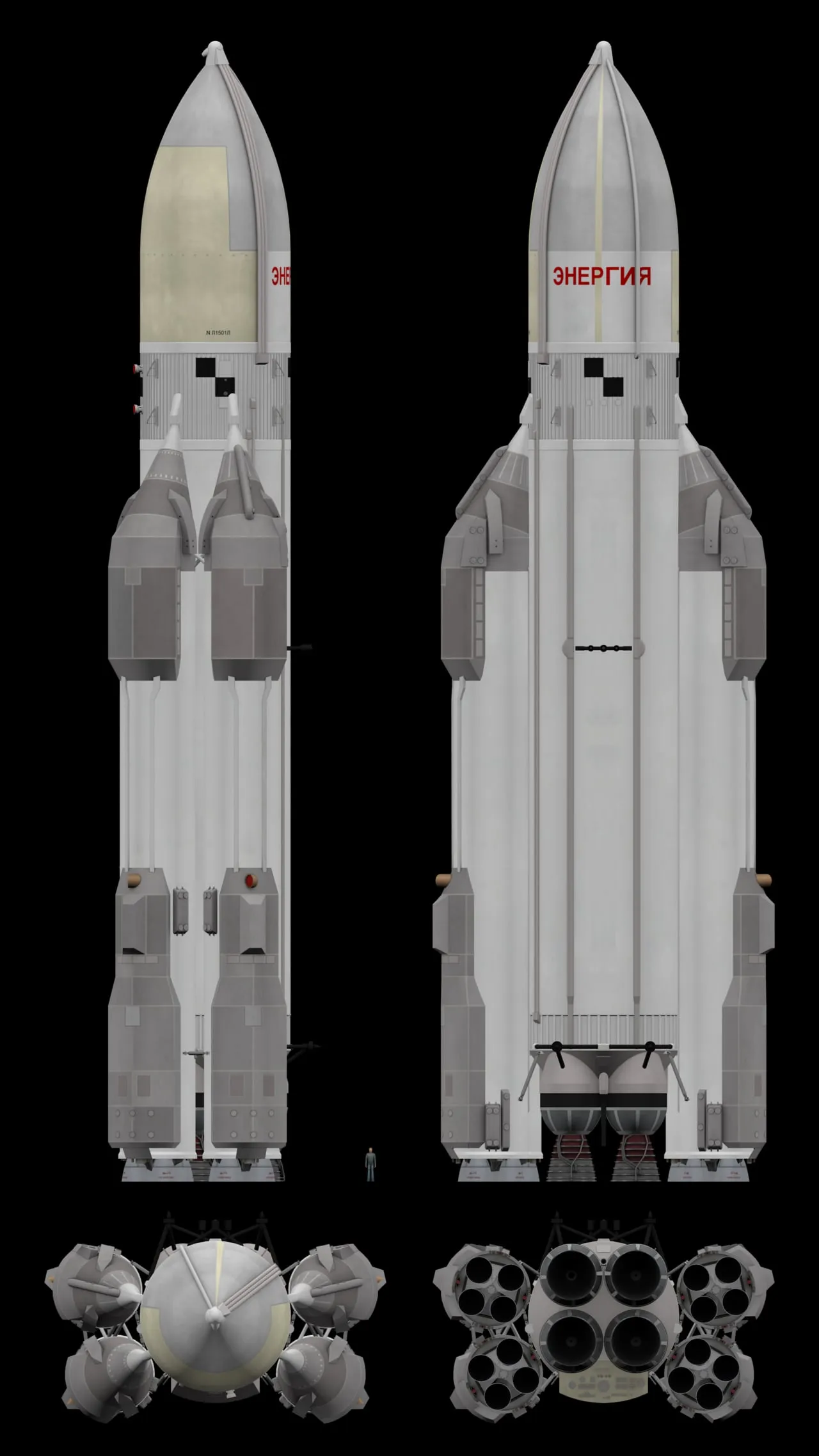
The first decision was about the engines. The American Shuttle mounted its three big main engines on the orbiter itself, which meant hauling that heavy, expensive machinery to orbit and back every flight and throwing away only the external tank. The Soviets instead put all the lift into the rocket: Buran rode on Energia, a true super-heavy launcher that did the whole job of reaching orbit, leaving the orbiter to be a payload rather than part of the propulsion. This made Energia useful on its own — a powerful rocket that could launch other heavy payloads with no orbiter at all — and freed Buran of a burden its rival carried for thirty years.
The second decision was automation. The American Shuttle always needed a crew to land it; it could not come home on its own. Buran was built to fly the entire mission — launch, orbit, reentry, and landing — with no one aboard, guided by its computers and the ground. In an era when full automatic landing of a winged spacecraft was at the frontier of what was possible, this was a genuine advance, and it set up the one moment when Buran got to prove what it could do.
Outcome
On 15 November 1988, Buran flew. It launched on Energia, circled the Earth twice, reentered, and — in a gusting crosswind that would have tested any pilot — brought itself down onto the runway at Baikonur fully automatically, touching down within metres of its target with no human aboard at any point. It was a flawless flight and a real technical triumph: no other winged spacecraft had flown an entire orbital mission and landed itself. And it was the only time Buran ever flew.
The timing could not have been worse. Buran reached its triumph exactly as the Soviet Union began to come apart. Within three years the country was gone; the money vanished; and a hugely expensive spaceplane built to counter an American threat had no threat to counter, no budget to fly, and no mission anyone could afford to give it. The program limped on paper until 1993 and was then cancelled outright. The final indignity came in 2002, when the roof of the hangar housing the one orbiter that had actually flown collapsed, crushing the spacecraft and killing eight workers. Buran's single flight remains one of the most impressive — and most pointless — achievements in the history of spaceflight.
The story
Buran is the story of a magnificent answer to a question that stopped being asked. Technically it was a success and in places an improvement on the vehicle it copied — the separate launcher, the automatic landing, real engineering advances. But it was built for strategic and political reasons that evaporated, at a cost the Soviet economy could not sustain, and it arrived at its moment of triumph just as the system that ordered it collapsed. No amount of engineering excellence could survive the disappearance of the reason for the program and the money to run it.
There is an irony worth holding onto. In the two respects where Buran differed from the American Shuttle — putting the engines on the rocket rather than the orbiter, and flying automatically without a crew — it arguably had the better ideas, and both have echoes in later spaceflight. And yet the American Shuttle flew 135 times over thirty years and built a space station, while Buran flew once. The lesson is not that Buran's engineering was worse; it is that engineering is never the whole story. A program needs a purpose and a budget that outlast its first flight, and Buran had neither.
What it gave back
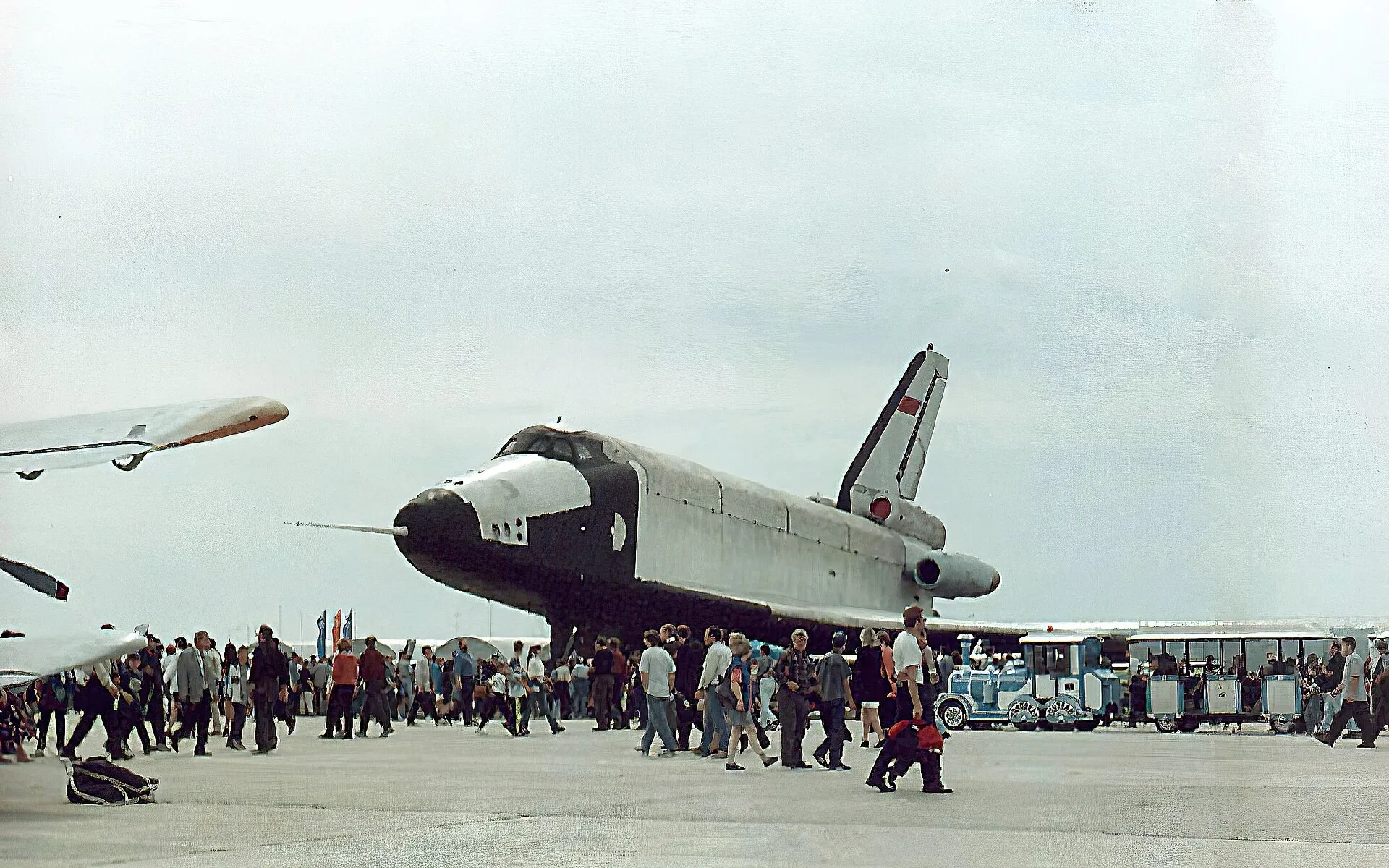
Buran's direct legacy is almost nothing — a cancelled program, a single flight, hardware in museums, and one orbiter lost under a fallen roof. But its indirect legacy is real. Energia proved that the Soviet Union could, at last, build a super-heavy rocket that actually worked, redeeming the failure of the N1 — even if it, too, was cancelled for want of anything to launch. And Buran's fully automated flight demonstrated a capability that would only become standard decades later, as uncrewed and autonomously-landing spacecraft became routine.
Mostly, though, Buran endures as a cautionary monument — the clearest case in the space age of a program that got the engineering right and everything else wrong. It stands beside the American Shuttle as the road not taken, and beside the N1 as the other great Soviet what-might-have-been: proof that in spaceflight, a brilliant machine with no purpose and no money is still a machine that does not fly.
What we can learn
Buran's first lesson is that a program needs a reason that outlasts its origins. It was born from a strategic fear and a refusal to let the Americans hold a capability the Soviet Union lacked — and when the fear faded and the Cold War ended, nothing was left to justify the enormous cost. Building an expensive capability to match a rival, rather than to do a job you actually need done, leaves you with a magnificent machine and no reason to fly it the moment the rivalry cools.
The second lesson is that engineering excellence cannot save a program from the loss of its purpose and its budget. Buran was, in real ways, a better design than the vehicle it answered — and it flew once. The American Shuttle, for all its flaws, flew for thirty years because it had missions to fly and money to fly them. A spacecraft is only as durable as the institutional will and funding behind it; without those, even a flawless flight is an ending rather than a beginning.
Missions
- 1988 The single flight on 15 November 1988 Buran flew one uncrewed orbital mission — a fully automated launch, two orbits, reentry, and runway landing in a crosswind, with no pilot aboard at any point
- 1993 Cancellation with the Soviet Union gone and no budget or mission left, the program was cancelled after its one flight; the flown orbiter was destroyed in 2002 when its hangar roof collapsed at Baikonur
Hardware
- Buran orbiter
- Energia launcher
- Buran Ok Gli test-article